
Bitcoin ($BTC) has bounced off the average cost basis of US spot Bitcoin exchange-traded fund (ETF) investors. Their average cost is currently standing near $81,500. This level has become a solid support according to Glassnode analysis. Glassnode has highlighted this level as a potential turning point for Bitcoin’s market structure. The successful defense of the ETF cost basis is a constructive short-term signal.
Bitcoin ETF Cost Basis Emerges as Key Support
BTC price has remained below ETF cost basis in most of the 2026. However, the recent price action suggests the dynamic may be changing. In the last 6 days, Bitcoin has tested the $81,500 zone twice. Both times, it recovered swiftly. Recent ETF flows have been mixed, inflows and outflows.

The US spot ETF cost basis is basically an estimate that at what average price major US spot Bitcoin ETFs bought their BTC. It provides a reference point for the entry prices of investors. When Bitcoin trades above this level, the average ETF investor is generally in unrealized profit.
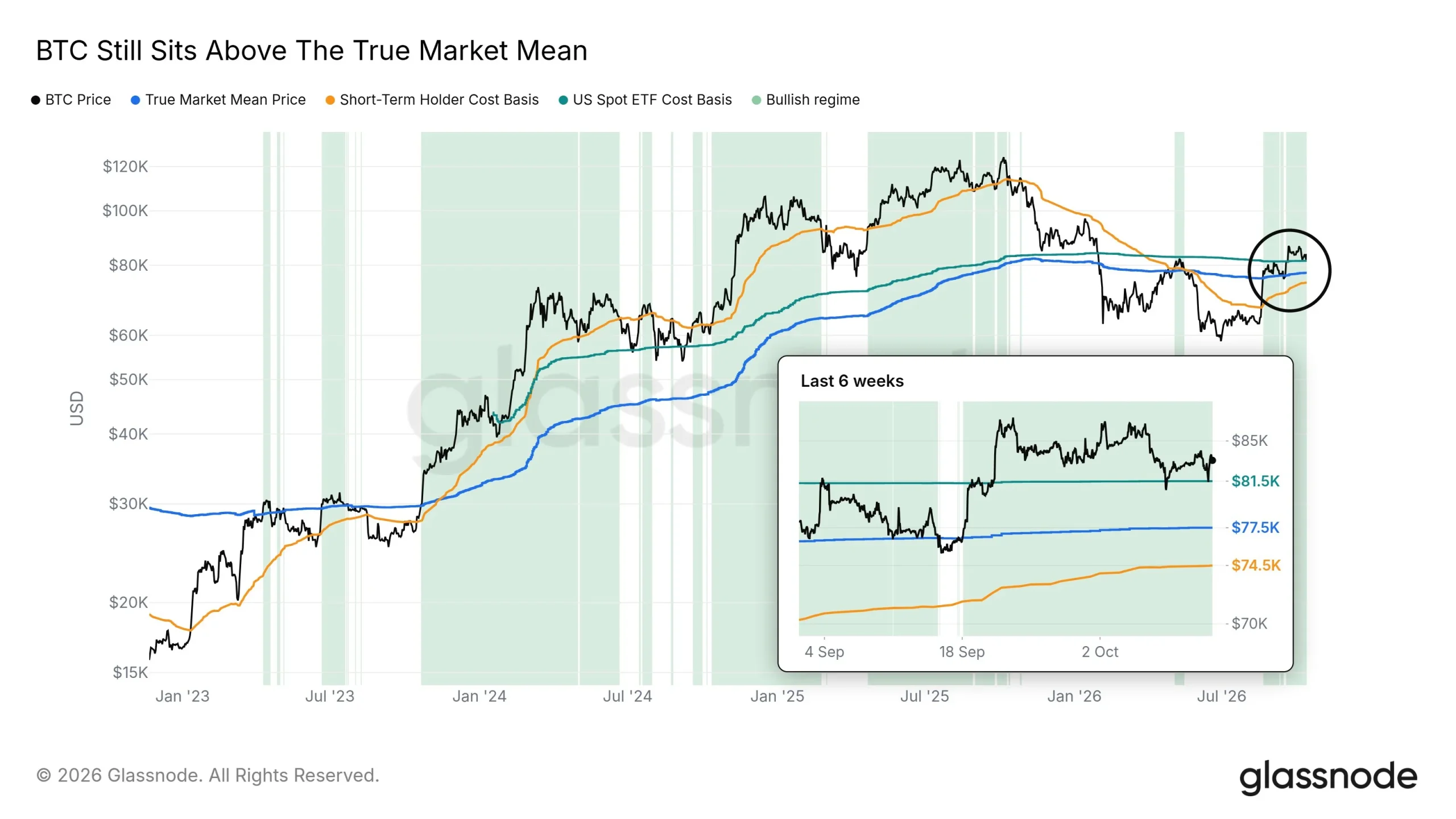
Glassnode’s chart shows Bitcoin’s price moving back above the ETF cost basis near $81,500 after spending an extended period below it. The recent retests suggest the level is shifting from resistance to support.
Glassnode Identifies $77.5K as Next Key Support
Glassnode’s analysis identifies the True Market Mean near $77,500 as the next major downside level if Bitcoin loses support at $81,500. Bitcoin trading above this level generally indicates that the average active investor remains in profit. A sustained move below it could signal increased market stress.
The development is particularly relevant as institutional access through spot ETFs has become an important part of Bitcoin’s market structure. However, the price action alone does not establish whether ETF investors are accumulating, holding, or preparing to sell.
Glassnode’s analysis highlights how investor cost bases can help traders assess potential support and resistance areas. The ETF cost basis tracks a specific investor cohort, while the True Market Mean provides a broader measure of the acquisition prices. Keeping an eye on both these levels gives investors a broad spectrum of the market.