
Oil prices rose slightly on the European market on Friday as attempts to resume rallies, after falling from yesterday’s four-year high, as rallies and profit-taking accelerated, with the fourth consecutive gain in a row, In the supplies of Iran after the entry into force of US sanctions early next month.
By 07:45 GMT US crude rose to $ 74.85 a barrel from the opening level $ 74.61, and recorded a high level of $ 74.92, and the lowest level of $ 74.60.

Brent crude oil rose to $ 85.01 a barrel from the opening level of $ 84.94 and recorded a high of $ 85.11 and a low of $ 84.81.
US crude oil lost 2.1% yesterday, the biggest loss since August 8, as correction and profit from a four-year high of $ 76.88 per barrel recorded the previous day, and Brent contracts by 1.3%, after Wednesday’s level $ 86.73 per barrel, the highest level since November 2014.
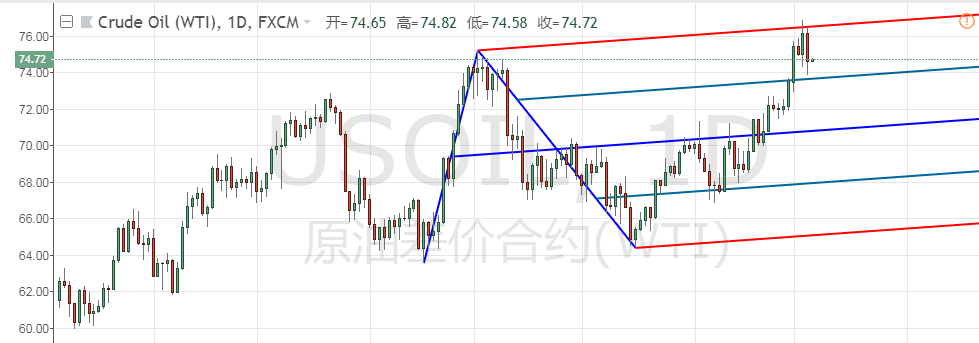
This week, global oil prices have soared an average of 2.25% for the fourth weekly gain in a row, the longest weekly gain since April, as the market continues to focus on the potential shortage of supplies after the US sanctions came into force earlier this month Next.
As the deadline for compliance with US sanctions on Iran approaches November 4, Iranian oil customers are increasingly cutting purchases, and the United Arab Emirates cut oil imports from Iran by half in September.
According to Bloomberg data, crude oil shipments from Iran, OPEC’s third-largest oil producer, fell to 1.72 million barrels per day in September, down 260,000 barrels per day from what was shipped in August.
The total of exported Iranian crude last month is the lowest Iranian exports since February 2016, especially as most major countries continue to respond to US pressure to reduce and stop buying oil from Iran.
With US sanctions coming into force early next month, Iran’s supplies will be further reduced, which could cause a supply shortfall in the market, so the United States is trying to compensate for the potential shortages, both domestic production and pressure on OPEC and Russia to boost output.
US investment bank Jefferies said Friday that Brent crude prices rose 6 percent last week as it became increasingly clear that Iranian exports could fall below 1 million barrels per day in November.
Russian President Vladimir Putin said this week that the United States sanctions on Iran were the main reason for the current high oil prices.
Saudi Arabia and Russia signed a special deal in September to increase oil production to stem rising prices before consulting with other producers inside and outside OPEC, Reuters said on Wednesday.
Saudi Oil Minister Khaled al-Falih said in Moscow on Wednesday that OPEC’s largest oil producer is currently pumping about 10.7 million barrels per day (bpd) near the record production level in November 2016.
In the United States, the US Energy Agency announced on Wednesday that the country’s commercial inventories rose by 8 million barrels in the week ending September 28, the biggest weekly increase since March 2017, exceeding experts’ expectations of 1.1 million barrels, the second weekly increase. Respectively.
According to the data, the total US commercial inventories rose to 403.9 million barrels, the highest level in the past five weeks, in a sign of falling demand levels in the world’s largest oil consumer.
For US production, the agency announced production stability this week with little change in the total of 11.1 million barrels, which is the highest level of production in the United States at all.