
The AUD/USD pair tumbled near its yearly low of 0.6340 during Tuesday’s European session as the US Dollar (USD) extended its gains. Firm expectations that the Federal Reserve (Fed) will adopt a more gradual policy-easing approach after a 25 basis points (bps) cut to 4.25%-4.50% in Wednesday’s meeting supported the Greenback’s strength. 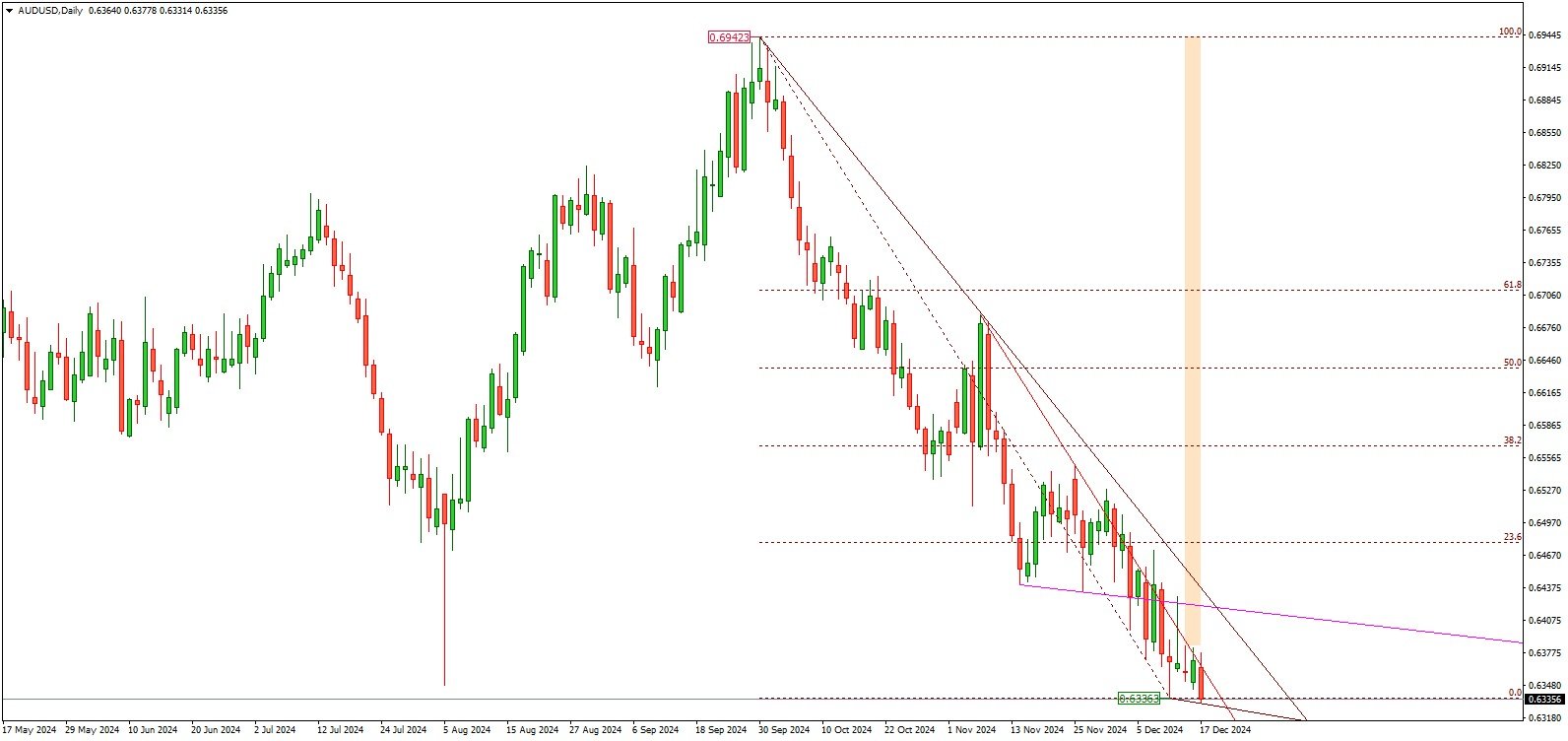
According to the CME FedWatch Tool, traders are pricing in an 80% chance that the Fed will hold rates steady in January 2025, signaling caution regarding the pace of future cuts. The US Dollar Index (DXY) rose above 107.00, bolstered by risk aversion, with US 10-year Treasury yields climbing to 4.42%. Additionally, weak sentiment pushed S&P 500 futures notably lower.

Investors will closely watch Thursday’s US Retail Sales report for November, expected to show accelerated growth of 0.5% (previously 0.4%), which could further bolster the USD.
Meanwhile, the Australian Dollar (AUD) remains under pressure amid growing speculation that the Reserve Bank of Australia (RBA) may begin cutting its Official Cash Rate (OCR) as early as February. Contributing to AUD weakness, Australia’s Westpac Consumer Confidence fell by 2% in December, erasing much of November’s 5.3% rebound and fueling concerns about the domestic economic outlook.
Furthermore, mounting fears over China’s economic slowdown—exacerbated by potential tariffs from US President-elect Donald Trump—have added to AUD’s woes. Australia, as China’s largest trading partner, remains particularly vulnerable to any downturn in Chinese demand.
Trade Idea:
Sell AUD/USD on rallies near 0.6360, targeting 0.6300 and 0.6280, with a stop-loss at 0.6400. Monitor Fed guidance and Australian sentiment indicators for further direction