
Bitcoin ($BTC) is presenting a significant shift in on-chain performance. The leading cryptocurrency is witnessing the formation of an exclusive support zone. The latest support zone is emerging between $61,849 and $64,374. The UTXO Realized Price Distribution (URPD) displays that over 2.36 million $BTC was last shifted within the respective price range. If this support holds, the local bottom of BTC ($57,800) may prove this cycle’s confirmed bottom.
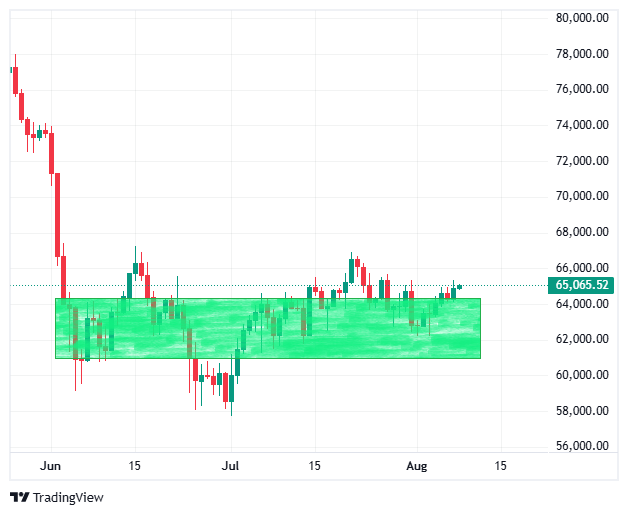
Bitcoin URPD Reveals Support Region Forming Within $61,849 – $64,374 Range

Based on the market data, Bitcoin’s ($BTC) new support zone is forming between $61,849 and $64,374. At the same time, up to 2.36M $BTC last shifted within this range in line with the UTXO Realized Price Distribution of Bitcoin. This realized price concentration highlights that a huge number of $BTC holders have diverse cost bases amassed around this zone.
Such a big coin accumulation can play a crucial role for market members if the top crypto asset goes through reignited selling pressure. Till the time this support zone stays intact, the wider bullish market outlook could keep on holding. Additionally, the URPD chart delivers a view of the $BTC supply according to the prices accounting for the last coin movement on-chain.
Instead of focusing just on the present trading operations, the metric assists in detecting price levels where notable $BTC amounts have developed realized costs. The above-mentioned range is critical because of the massive $BTC volume linked with it. Within this area, the $63,111 mark is very significant, showing the biggest coin concentration. Additionally, the $64,374 mark is the upper boundary of the support zone, while the $61,849 is the lower boundary.
Decline Below $61,849 Could Negatively Impact Bitcoin Sentiment
Keeping in view the market-structure perspective, support areas bolstered by big realized price concentrations can impact investor behavior. Particularly, holders accounting for acquisition costs that come within the range may show more inclination toward defending positions in case prices hit entry levels. Simultaneously, a decisive dip below this region could change sentiment, specifically if weak demand and growing selling pressure accompany diminishing support.