
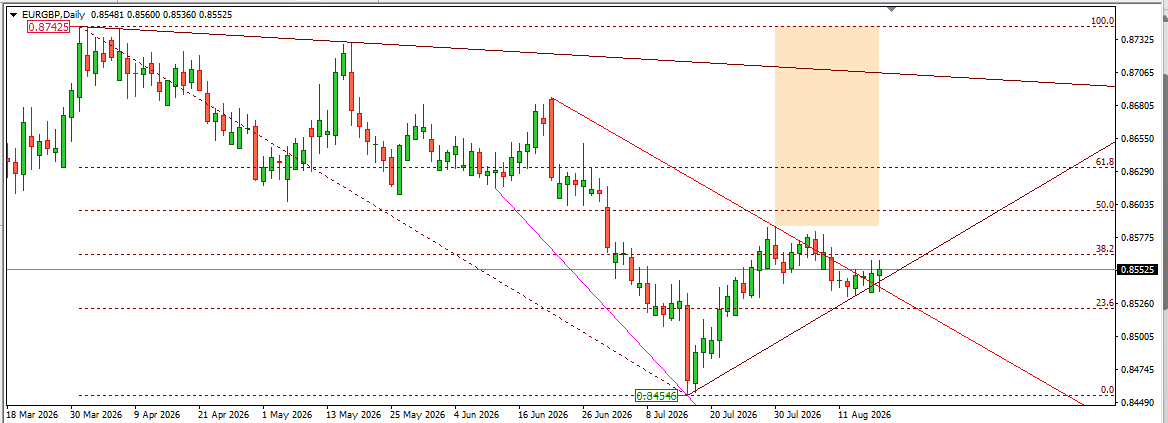
EUR/GBP is trading near 0.8550 on Tuesday, giving back earlier advances as the Euro struggles to maintain momentum against the Pound Sterling. The decline comes despite a combination of supportive factors for the single currency, including weaker-than-expected UK labor data and improved German economic sentiment.

Germany’s ZEW Economic Sentiment Index climbed to 34.2 in August, surpassing market expectations of 30.0 and improving from July’s 26.3 reading. The broader Eurozone sentiment indicator also showed a stronger-than-anticipated recovery. However, the positive data failed to generate significant demand for the Euro, with limited impact on EUR/USD and little support for EUR/GBP.
Sterling had initially faced selling pressure following the latest UK employment figures covering the three months through June. The ILO unemployment rate remained unchanged at 4.9%, slightly above forecasts of 4.8%, while employment growth showed signs of slowing. Analysts noted that the report reflected a cooling labor market and limited wage pressure, reducing expectations for aggressive Bank of England tightening.
Despite the weaker employment figures, the Pound regained stability during the European session, allowing EUR/GBP to move lower. Investors are now shifting focus toward Wednesday’s release of UK Consumer Price Index data for July, which is expected to show inflation rising to 2.9% year-on-year from the previous 2.6%.
A stronger-than-expected inflation reading could increase expectations for additional Bank of England rate hikes, potentially supporting Sterling and pushing EUR/GBP lower. Conversely, a softer inflation result may weaken the Pound and provide the Euro with an opportunity to recover.
Trade idea: EUR/GBP remains vulnerable below 0.8560; traders may consider selling rallies toward resistance while targeting 0.8500 if UK inflation supports Sterling strength.