
The GBP/USD pair traded under bearish pressure on Tuesday, dropping below 1.2300 as the US Dollar (USD) gains traction following tariff threats from US President Donald Trump. GBP/USD hovers around 1.2250 when writing, down 0.6% daily.
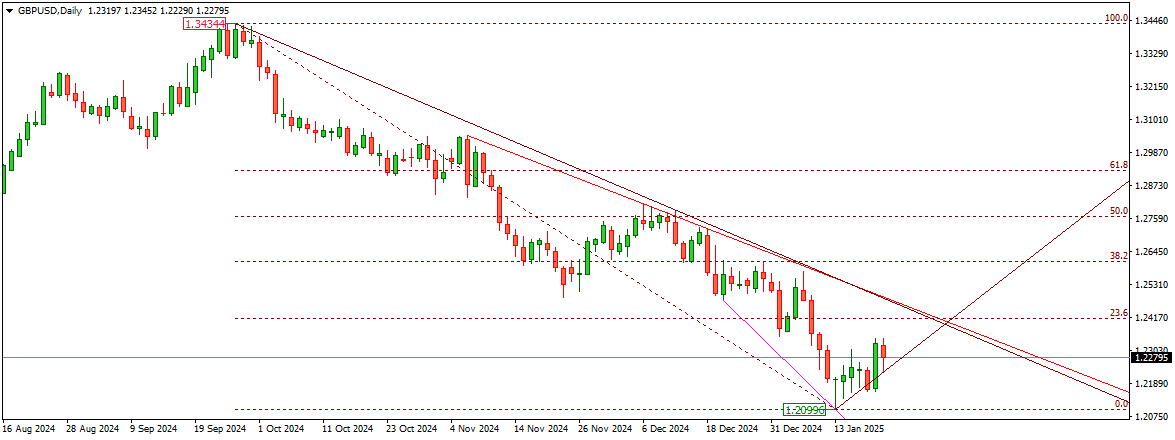

The pair experienced a sharp rally on Monday, registering a 1.3% gain amid broad USD selling driven by speculation that Trump would not announce immediate tariffs during his inauguration. However, sentiment shifted in the Asian session when Trump raised the possibility of imposing tariffs on China, Mexico, and Canada, sparking a USD rebound.
UK labor market data released earlier in the European session also weighed on the Pound Sterling (GBP). The ILO Unemployment Rate ticked higher to 4.4% in the three months to November, missing expectations of 4.3%. Employment Change rose by just 35K, a significant drop from October’s 173K increase. Although Average Earnings Including Bonus climbed to 5.6% annually, the overall labor market report failed to provide meaningful support for the GBP.
With no high-impact US economic data scheduled for release, risk sentiment will likely dictate market direction in the latter half of the day. A bearish opening on Wall Street could sustain the strength of the USD, further pressuring GBP/USD.
Trade Idea:
Sell GBP/USD on a sustained break below 1.2230, targeting 1.2150, with a stop-loss at 1.2280. Monitor risk sentiment and tariff-related updates for further clues.