
The Chinese yuan found modest support against its US peer to kick off the trading week. The yuan had erased all of its gains this year amid growing tensions with the US and uncertainty surrounding monetary policy. Could the currency start making a comeback in the second quarter of 2021, or will low volatility be the theme for the USD/CNY currency pair?
According to the People’s Bank of China (PBoC), the nation’s financial institutions issued $416.62 billion in new yuan loans in March, beating market expectations. But it is lower than the figure from the same time a year ago.

The data comes soon after the central bank reportedly urged banks to curtail their new lending activities to prevent a credit crisis. Policymakers also urged lenders to focus their efforts on enhancing credit growth in certain areas, particularly technology and manufacturing.
In other data, outstanding loan growth cooled to 12.6% year-over-year last month, down from 12.9% in February. Total social financing jumped by 50%, while the M2 money supply growth slowed to an annualized pace of 9.4% in March.
Market analysts will be monitoring monetary policy this week since $15.26 billion worth of medium-term lending facility (MLF) instruments will expire on Thursday. The central bank has been issuing billions in reverse repurchasing agreements for 30 consecutive days to ensure ample liquidity in the banking system. But with tax season and local government bond issuance, financial observers are betting on PBoC-supported money market liquidity.
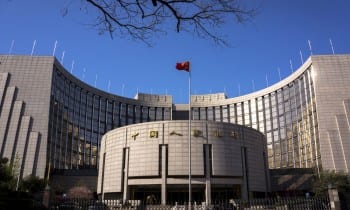 Overall, foreign exchange markets and investors in the broader equities arena will be waiting for clues on any immediate adjustments to monetary policy positions at the PBoC and other major central banks.
The central bank has routinely stated that it aims to stabilize the nation’s increasing debt levels amid stimulus and relief efforts. At the same time, policymakers are too concerned that tightening policy could hurt the economic recovery. It is a balancing act for many of these leaders.
Also, on Friday, the China Association of Automobile Manufacturers (CAAM) reported that automobile sales climbed 74.9% year-over-year to 2.53 million units in March, the 12th consecutive monthly gain. Officials warned that the global chip supply shortage would significantly hurt the country’s auto industry in the second quarter.
Meanwhile, geopolitical issues are intensifying after seven Chinese companies were added to a US economic blacklist. Plus, the rise of the digital yuan has many questioning if this will target the US dollar.
Peter Reagan, a financial market strategist at Birch Gold Group, wrote on Newsmax:
If the dollar loses its hegemony as the global reserve currency, we’d see an all-fronts crisis. All those overseas dollars would come flooding back. Global central banks would no longer have any interest in holding US Treasury bonds and bills. It’s quite likely that already rising inflation would skyrocket. Analysts say such a dollar disaster could also ‘push up interest rates for American consumers and businesses, making everything from buying a house to building a factory more expensive.’ Imported goods and services might become astronomically expensive. International travel? Forget it.”
The USD/CNY currency pair fell 0.13% to 6.5446, from an opening of 6.5530, at 12:11 GMT on Monday. The EUR/CNY declined 0.08% to 7.7930, from an opening of 7.7984.