
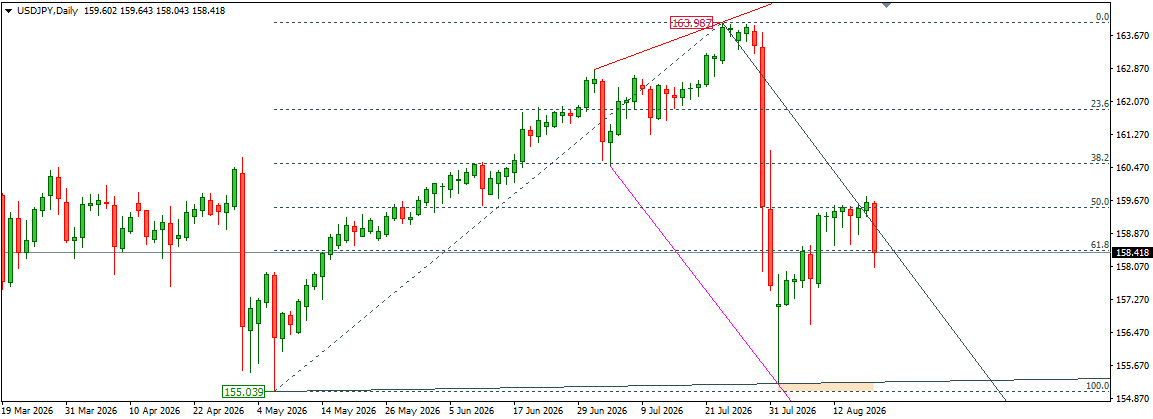
USD/JPY falls sharply on Wednesday, trading near 158.47 after touching its lowest level in more than a week. The Japanese Yen has strengthened as the US Dollar comes under renewed pressure following a significant decline in longer-term US Treasury yields.

US yields moved lower after the Treasury Department announced plans to increase buybacks of longer-dated government debt. The maximum size of operations covering 10-to-20-year and 20-to-30-year maturities will rise from $2 billion to at least $4 billion. The larger operations are scheduled to begin September 9 and continue through November 4, with the Treasury saying the program is intended to improve liquidity in the long-term bond market.
The benchmark US 10-year yield dropped more than five basis points to around 4.64%, while the 30-year yield declined nearly 10 basis points to approximately 5.18%. Lower yields reduce the attractiveness of Dollar-denominated assets and have triggered broad-based selling of the Greenback.
The US Dollar Index also weakened, falling about 0.72% to 98.94 and reaching its lowest level since May 29. Investors remain focused on the Federal Reserve’s monetary policy outlook, particularly after recent employment and inflation data reduced expectations for an immediate rate hike.
Nevertheless, persistent energy-related inflation risks could complicate the Fed’s policy path. The ongoing US-Iran standoff surrounding the Strait of Hormuz has kept oil-market uncertainty elevated, potentially creating renewed inflationary pressure. Traders therefore await the July FOMC meeting minutes for additional insight into policymakers’ views on future interest rates.
For the Yen, expectations of possible intervention by Japanese authorities and a potentially more hawkish Bank of Japan continue to provide support. However, fiscal concerns, elevated oil prices and still-wide interest-rate differentials could limit the currency’s recovery.
Trade idea: USD/JPY remains bearish below 159.00; selling rallies toward 158.80 could target 157.50, with Fed minutes posing the main near-term volatility risk.