
GBP/CAD is showing signs of continued bearish pressure as it trades within a clear descending triangle on the 4-hour chart. Currently, the pair is hovering around 1.84656, having recently pulled back from the upper boundary of the triangle.
The price action reveals a series of lower highs and lower lows since early March, confirming the bearish trajectory. The 100 SMA (blue line) has crossed below the 200 SMA (red line), suggesting strengthening downside momentum. Both moving averages are now acting as dynamic resistance levels for any potential rebounds.

Support is established near the 1.83678 level, which coincides with the lower boundary of the triangle. If bears maintain control, a break below this level could accelerate the decline toward the 1.83000 psychological support.
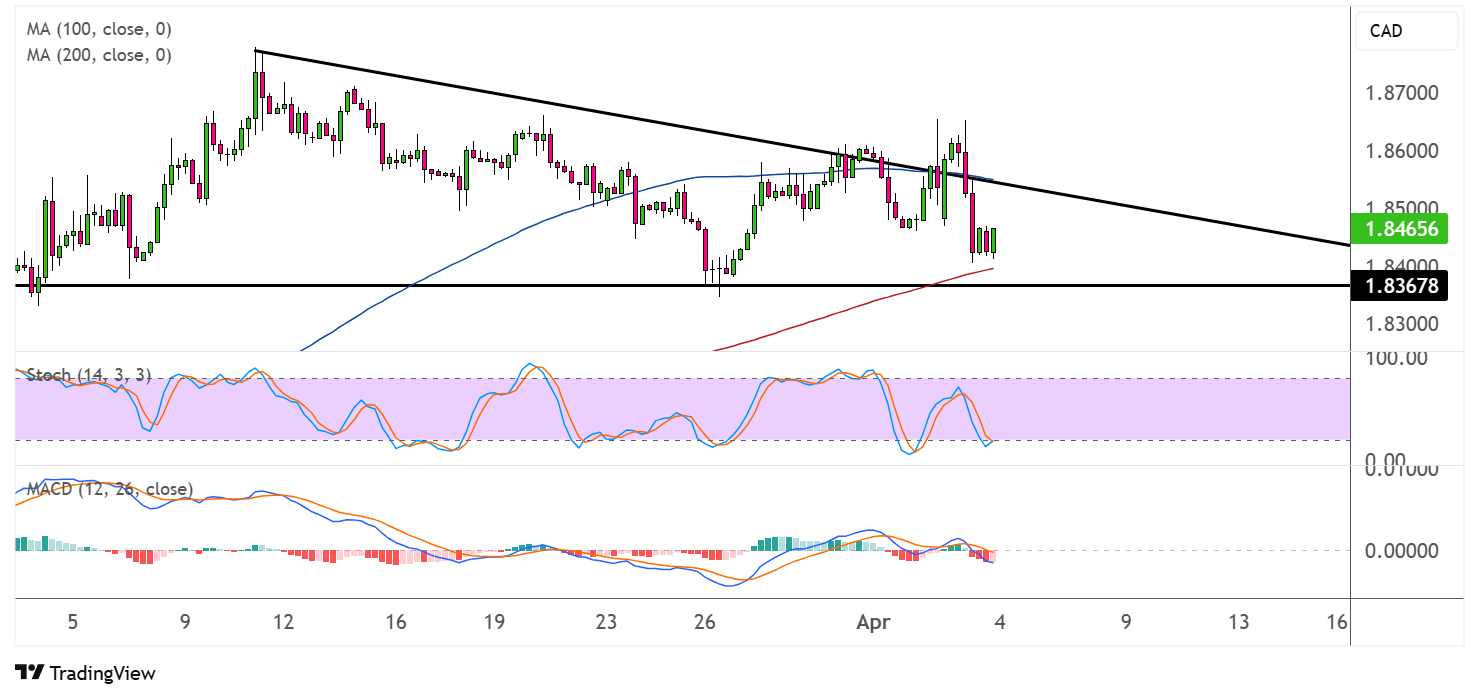
The stochastic oscillator is moving downward from the overbought territory, indicating that selling pressure is intensifying. This technical signal suggests that the current pullback may continue in the short term. Meanwhile, the MACD histogram shows diminishing bullish momentum with the possibility of a bearish crossover, further supporting the bearish outlook.
Should the pair attempt a recovery, immediate resistance can be found at the 100 SMA around 1.85500, followed by the descending trendline resistance near 1.86000. A decisive break above these levels would be needed to invalidate the current bearish structure.
Traders should watch for potential bounces from the lower channel support, which could provide short-term bullish opportunities. However, the overall trend remains bearish as long as the price stays within the descending triangle.
For confirmation of further downside, market participants should monitor for a clean break below the 1.83678 support level, which would likely trigger a move toward the next significant support at 1.83000. Conversely, a daily close above the upper triangle boundary would suggest a potential reversal of the current downtrend.
Weaker crude oil prices on account of trade-related uncertainty are weighing on the Canadian dollar, although sterling is also on the back foot due to trade risks in the European region.