
Bitcoin stalled its bounce entering the late Thursday session after a wave of selling in the US government bonds push the yields on both short- and long-term notes higher.
The flagship cryptocurrency dropped below $45,000 ahead of the London opening bell Friday on profit-taking sentiment. Investors moved out of profitable assets to seek short-term insurance in assets that lost their valuations during the pandemic last year. That included the US dollar, which opened around 0.45 percent above its previous close.
Bitcoin momentum…

…started faltering after its price reached a record high level above $58,000 during the weekend session. It also provided traders the opportunity to secure greater profits after the cryptocurrency’s 100 percent price rally in 2021. Later, prospects of better-than-expected economic growth in the US provided tailwinds to Bitcoin’s downside correction.
As of this press time, the BTC/USD exchange rate was down more than 22 percent from its record high.
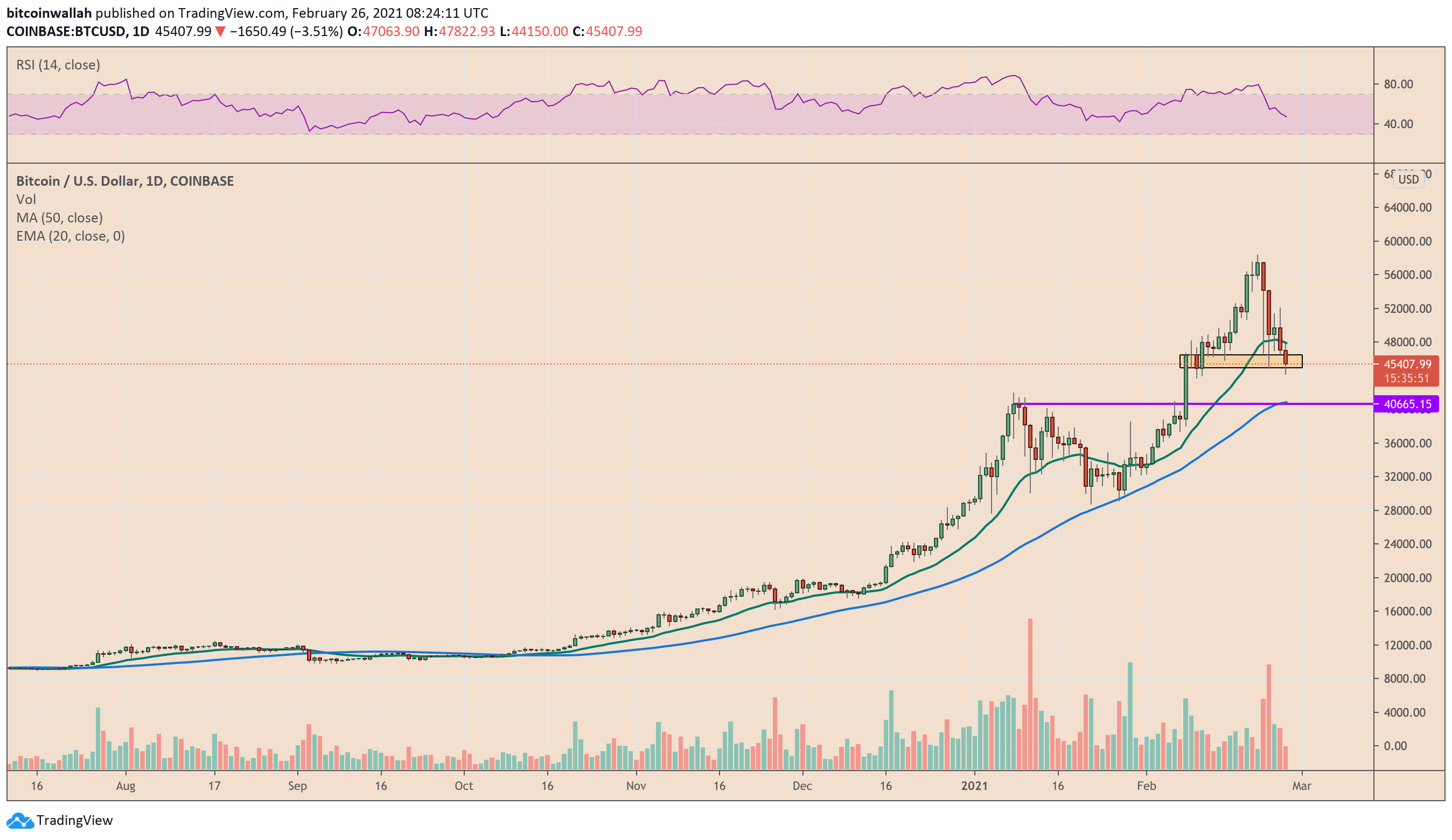
Technically, Bitcoin’s downside move brought its prices inside a support area that earlier helped the cryptocurrency sustain its upside bias. The past of least resistance appeared to the downside, with BTC/USD eyeing the 50-day simple moving average as its next support target.
Meanwhile, a failure to defend the 50-SMA support risked sending prices to mid- or upper-$30,000s.
Those downside risks…
…appeared higher should the sell-off in short-dated US Treasurys picks momentum. The five-year yield rose to 0.799 percent on Thursday from its previous close of 0.612 percent. That marked its highest one-day gain since December 2010. Meanwhile, the benchmark 10-year note yield climbed to its highest in one-year, hitting 1.539 percent before closing the session at 1.513 percent.
Bitcoin’s fall and bond yields’ climb came after Labor Department data showed a dramatic drop in the number of Americans filing for unemployment benefits last week. That signaled that the jobs market might stabilize much in line with what the Federal Reserve anticipated before it tapers its quantitative easing programs.
Riskier assets like bitcoin benefited the most from the central bank’s intervention policies, including a $120bn monthly asset purchase program and interest rates near zero. An improving job market removes the necessities of keeping those dovish policies in place, which hurts the pandemic winners, including tech stocks.
But this economic growth tends to ride on higher inflation. The Fed and the US government have injected trillions of dollars of liquidity into the economy since the pandemic began last March. That has resulted in a weaker US dollar, hurting savers and cash Treasurys.
Companies like Tesla, Square, and MicroStrategy have already dumped a substantial amount of their dollars for Bitcoin, believing its gold-like scarcity would protect their reserves from fiat devaluation.
“Traditional treasury strategies no longer work to preserve shareholder value,” said Michael Saylor, the MicroStrategy CEO. “Corporations need new techniques to manage the dilutive impact of monetary inflation on their balance sheet. The best idea is Bitcoin.”