
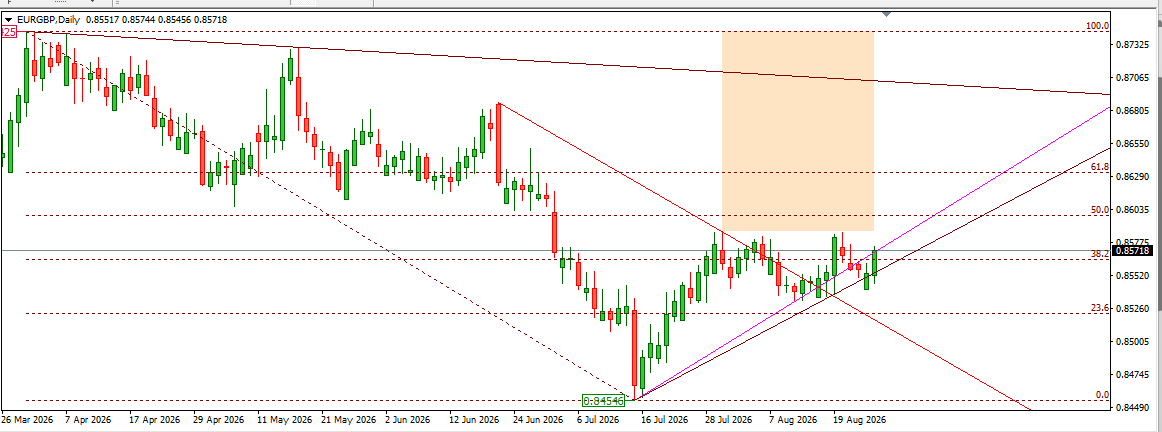
EUR/GBP trades around 0.8570 on Wednesday, extending its recovery as optimism over a potential de-escalation in the Gulf provides modest support to the Euro. The pair has moved above its 20- and 100-period moving averages on the 4-hour chart, both clustered around 0.8558, and is testing the session high near 0.8574.

The Euro’s strength is partly linked to reports suggesting that Washington and Tehran may be moving toward a ceasefire that could restore freedom of navigation through the Strait of Hormuz. The strategically important waterway previously handled roughly one-fifth of global Oil and LNG shipments. For the Eurozone, which relies heavily on energy imports, a reopening of the route could ease supply concerns and potentially reduce fuel costs, giving the single currency an advantage over Sterling.
However, traders remain cautious as the reported agreement has yet to receive official confirmation. Reports that Iran has adopted a more offensive military posture and that discussions with Oman over management of the Strait remain inconsistent are limiting the Euro’s upside. Markets are therefore likely to wait for clearer evidence before fully pricing in a sustained improvement in regional conditions.
The technical picture has also improved for EUR/GBP. A sustained move above the 0.8558 moving-average cluster strengthens the near-term bullish bias, while a break above 0.8575 could open the way toward higher resistance levels.
Attention now shifts toward Germany’s unemployment figures due Friday, with the jobless rate expected to remain at 6.4% in July. Eurozone confidence surveys will also provide additional clues about the region’s economic outlook.
With the UK economic calendar relatively quiet, Sterling is likely to remain sensitive to broader risk sentiment and geopolitical developments.
Trade idea: EUR/GBP remains bullish above 0.8558; buying dips near 0.8560 could target 0.8600, while a break below 0.8545 would weaken the setup.