
Gold futures fluctuated in a narrowly bullish range during the US session while still losing seven weekly losses in eight weeks, keeping the USD index up for the second straight session in a row, the third weekly loss in a row, And the economic data that followed Friday on the Chinese economy, the largest consumer of metals globally and his counterpart the US economy, the largest economy in the world.
Gold futures for December delivery rose 0.29% to currently trade at $ 1,208.50 per ounce from the opening at $ 1,205.00 an ounce, while the US dollar index rose 0.20% to 94.91 compared to the opening at 94.72.

We followed the Chinese economy, the world’s second-largest economy and second largest industrialized nation after the US, to reveal the Industrial and Service PMI reading by the China Logistics and Procurement Federation (CFLP), which showed the industrial sector expanded to 51.3 from 51.2 in July, Compared to expectations of 51.0, and the service sector expanded to 54.2 versus 54.0, also from expectations of 53.8.
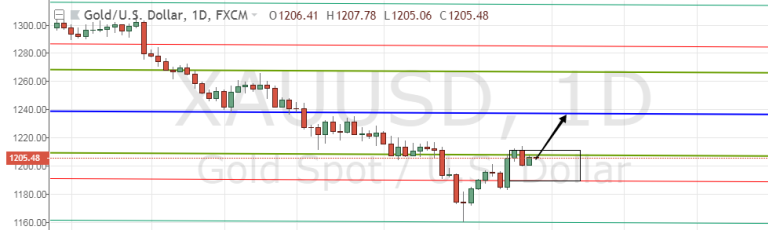
On the other hand, we followed the US economy reading the Chicago Purchasing Managers Index, which showed a contraction of 63.6 versus 65.5 last July, above expectations of 63.0, ahead of the final reading of the University of Michigan Consumer Confidence Index for the month Which may reflect a widening to 97.1 versus 95.3 in the previous preliminary reading and compared to 97.9 in July.
The World Gold Council revealed last month that it expects higher demand for the yellow metal during the second half of 2018, citing high inflation and the possible impact of the potential trade war and its impact on currencies. Global trade tensions, but gold did not rise during the first half of this year due to strength of the US dollar.
The strength of the greenback is due to growing market expectations for a faster rate hike in federal funds this year following the strength of US economic data. The Council noted that demand for the yellow metal is likely to rise in the second half of the year with The tendency to use gold as a tool to hedge inflation, in addition to the recent decline in prices support the increasing demand for gold.
Gold holdings at SbDeR Gold Trust, fell by 2.06 metric tons to 757.81 metric tons on Thursday, marking the lowest level of holdings since February 22, 2016. Gold prices are currently in fifth consecutive monthly losses, reflecting the longest monthly losses since early 2013.