
The NZD/USD looks undecided on the short term, continues to move sideways above an important confluence area, the rate has retested some important support levels and now is somehow expected to increase again because the rate is located in the buyers territory, the sentiment remains unchanged until the USD will become strongly bullish again.
A disappointment tonight will send the greenback tumbling versus all its rivals, the USD has increased a little today as the USDX has edged higher, the index has reached new highs, but wasn’t able to stay there, has jumped above the 96.23 previous highs, but unfortunately for the USD, the index has slipped again below the 95.98 static resistance.

The Kiwi has posted humble gains today as the New Zealand economic data have come worse than expected, the Visitor Arrivals have dropped by 1.9% in August, actually has plunged after the 2.9% growth from July, this is the biggest drop after August 2016. Moreover the Credit Card Spending has increased only by 1.9% in August, less than the 5.6% from July, the Kiwi is still waiting for a bullish spark, which delays to appear.
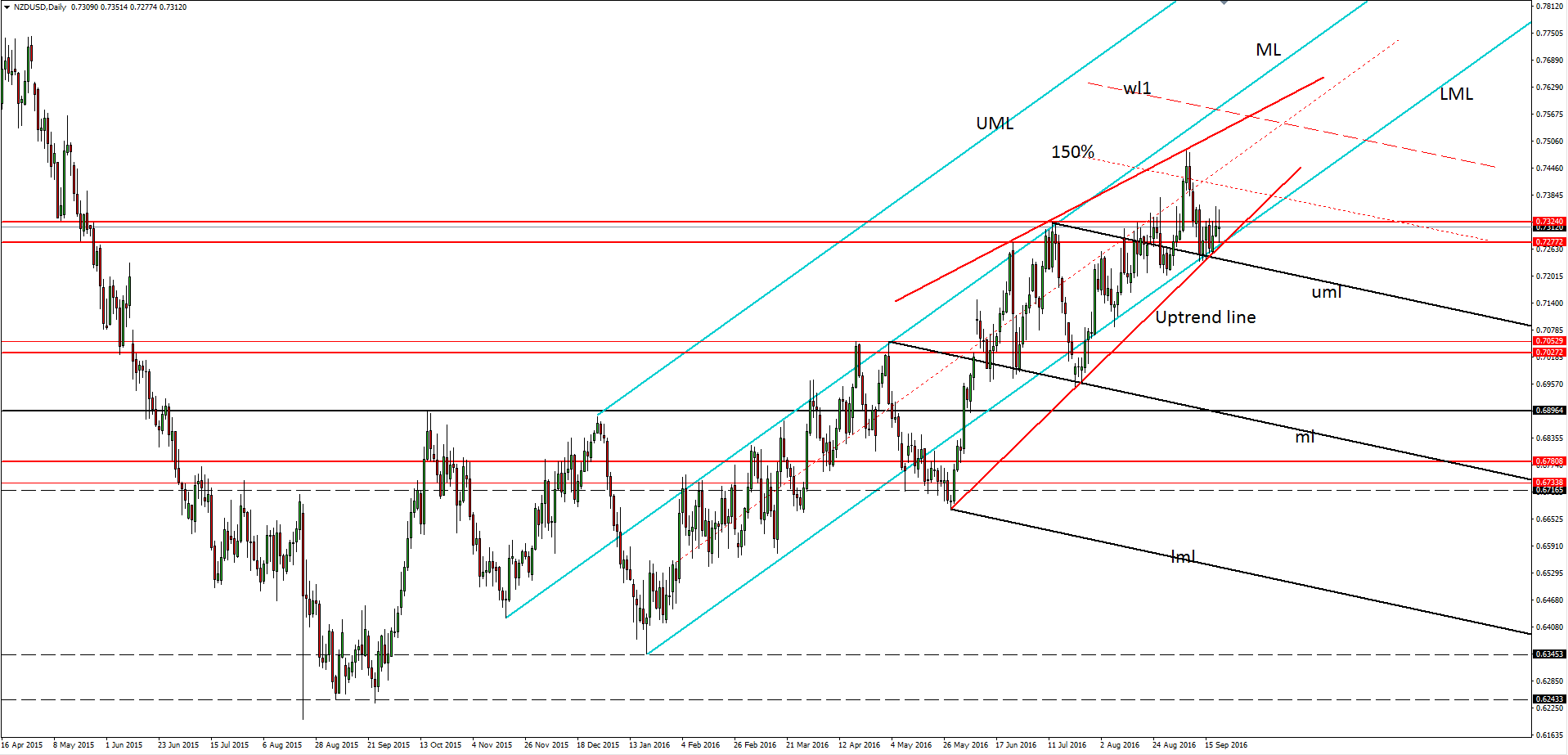
The rate is still trading inside of a Rising Wedge pattern, has come down to retest the downside line of the ascending pitchfork and also the lower median line (LML) of the ascending pitchfork, the perspective is bullish as long as is trading above these dynamic support levels, personally I think that we’ll have a trading opportunity in the coming days, even if will be long or short. We’ll have as selling opportunity only if the rate will drop below the mentioned dynamic support level, technically the rate is somehow expected to break the Rising Wedge pattern in the coming period because has failed to reach again the median line (ML) of the major ascending pitchfork, but the rate could increase a little to approach again the 0.7484 swing high, the rate needs to take out the 0.7324 static resistance to be able to climb higher on the short term. Maybe will be better if you’ll stay away from trading tonight during the FOMC, because we could have high volatility.