
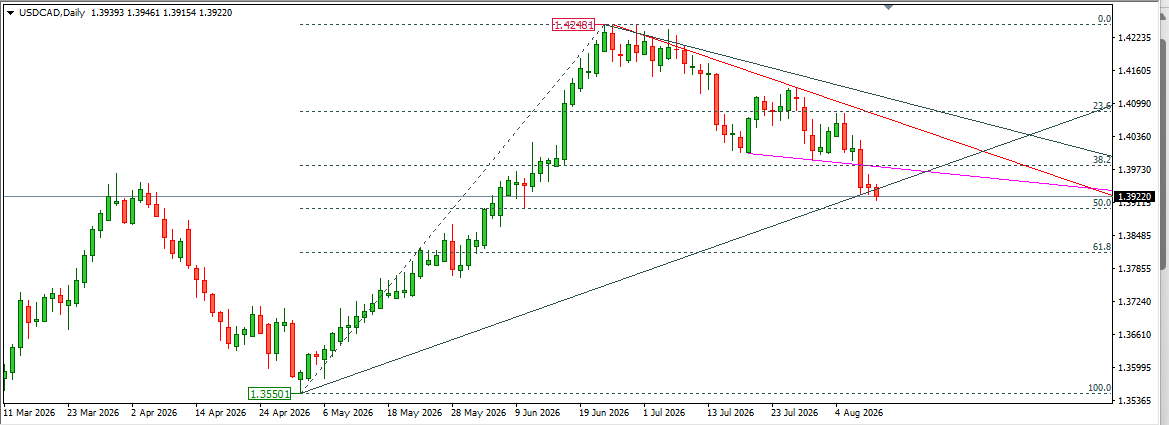
USD/CAD remains under pressure on Tuesday, marking its third consecutive session of weakness. Despite the decline, bearish momentum has been limited as the US Dollar holds relatively firm ahead of Wednesday’s crucial US Consumer Price Index (CPI) report. The pair is trading near 1.3930, close to a two-month low.

Oil prices remain volatile as markets monitor developments surrounding the Strait of Hormuz. Qatar’s Foreign Ministry stated Tuesday that negotiations between Iran and Oman regarding a potential reopening of the strategic waterway have reached an advanced stage. Any progress toward reopening the strait could ease concerns over energy supply disruptions and influence crude prices.
The Canadian Dollar remains particularly sensitive to movements in Oil because Canada is a major crude exporter. West Texas Intermediate (WTI) is trading near $81.50, retreating from an intraday high of $83.57 but still recording gains of more than 5% since the beginning of the week.
Persistent strength in Oil prices is keeping inflation concerns elevated and reinforcing expectations that major central banks may maintain restrictive monetary policies for longer. Investors are therefore closely watching Wednesday’s US CPI figures for additional guidance on the Federal Reserve’s interest-rate outlook. According to the CME FedWatch tool, markets currently see roughly a 50% probability of a September Fed rate hike.
Canada’s economic calendar is relatively quiet this week, leaving the CAD largely influenced by Oil price movements and broader market sentiment ahead of next week’s Canadian inflation report.
TD Securities expects the Bank of Canada to maintain its policy rate at 2.25% throughout 2026 before gradually returning toward a neutral 2.75% rate in 2027. The bank expects the BoC to remain patient, citing contained core inflation, well-anchored expectations and uncertainty surrounding geopolitical developments.
Trade Idea: Consider selling USD/CAD below 1.3950, targeting 1.3860, with a stop-loss above 1.4000 if Oil strength and CAD demand persist.