
The USD/JPY currency pair is trending downwards on Thursday after the US 10-Year Bond Yield fell further to the lowest point in over a year. The currency pair has been on a downward movement for the better part of this month and that momentum is seen carrying on to the next month. The pair had been on a bullish trending channel before it broke out of it early last week when it became apparent that the Federal Reserve was not going to hike rates this year.
USD/JPY Fundamentals Overview
From a fundamentals perspective, the USD/JPY currency pair reacted to US data released later in the day sparking a rebound in the pair to end the day up about 0.45%. The US GDP is now expected to grow at 1.9% in Q4 on a quarterly basis and this helped to rally the US Dollar Index to a 3-week high of 97.30.

On the other hand, stocks rallied marginally while the yield curve tried to make a late rebound to close the day at around the 2.382% level. As such, the pair is expected to experience short-term consolidation along the 100.50 level before the fundamentals can trigger a major swing to either direction.
USD/JPY Technical Analysis (the 240-min Chart)
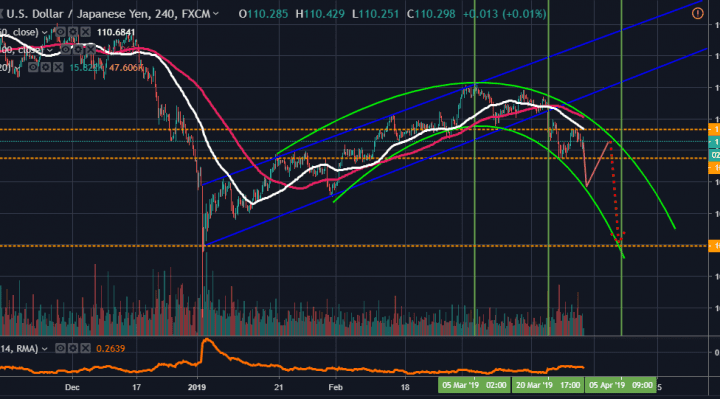
Technically, the USD/JPY currency pair appears to be on a bearish trend which started early this month. And following the recent pullback, this has created interesting opportunities for the bulls.
They will be looking for a rebound by targeting opportunities at around 11.65 level while the bears will hope that the current pullback continues by targeting opportunities at around the 109.75 level.
USD/JPY Technical Analysis (the Daily Chart)
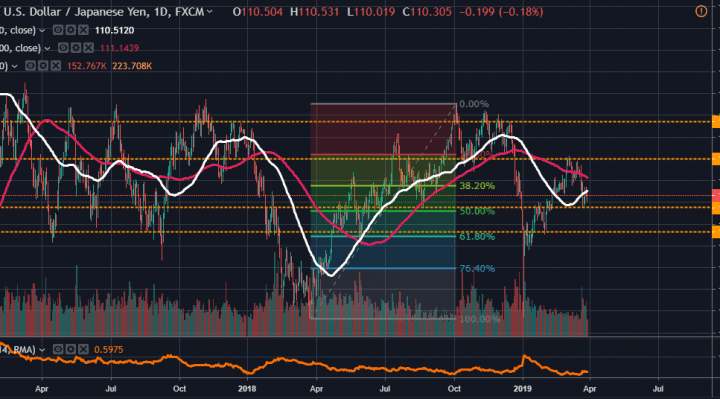
And in the daily chart, the current pullback appears to have brought the pair close to the 50% Fib level, which means that the 61.80% Fib level, at around the 108.64 level will provide the bears with a realistic long-term target.
On the other hand, the bulls will be looking to target opportunities at around the 38.20% Fib level which is just above the 112.00 range.
In summary, the USD/JPY currency pair recent rebound appears to be ending following the current pullback. Whether the pair can bounce again to hit 2019 highs remains to be seen, but currently, the bears appear to have taken control.