
Building on Friday’s late recovery from the 0.6765–0.6760 range, or its lowest level since June 2020, the AUD/USD currency pair began the new week on a high note.
The AUD/USD pair reached its peak at 0.6958 and saw sellers near the 0.6950 level, which marked the 23.6 percent retracement of its most recent daily fall between 0.7282 and 0.6855.

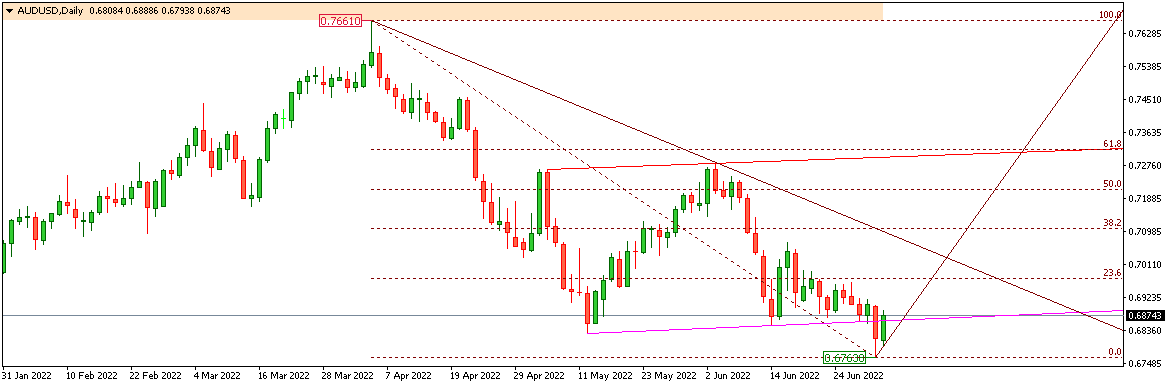
The 4-hour chart gives the pair a neutral to bearish outlook for the immediate term. With intraday support around 0.6910, the AUD/USD pair has spent the day settling between the aforementioned Fibonacci level and a flat 20 SMA. Although they have made a slight downward swing, technical indicators are still at neutral levels.
Demand for AUD should increase through the rest of the year and into 2023 due to more accessible policies in China and the acceleration of GDP as lockdowns cease. There will be potential for some AUD recovery by that point, as the inflation anxiety that has been weakening investor confidence should have subsided by then as well.
The market is expecting the RBA to raise rates by about 225 basis points, but we don’t think that will happen. However, the Fed will experience a similar situation, which will act as a catalyst for a more general decline in the value of the US dollar and support the AUD/USD.
Conclusion
Beyond a few short-term difficulties, the picture for AUD is more favorable. Consequently, according to MUFG Bank economists, the Australian dollar will strengthen by the year’s close.