
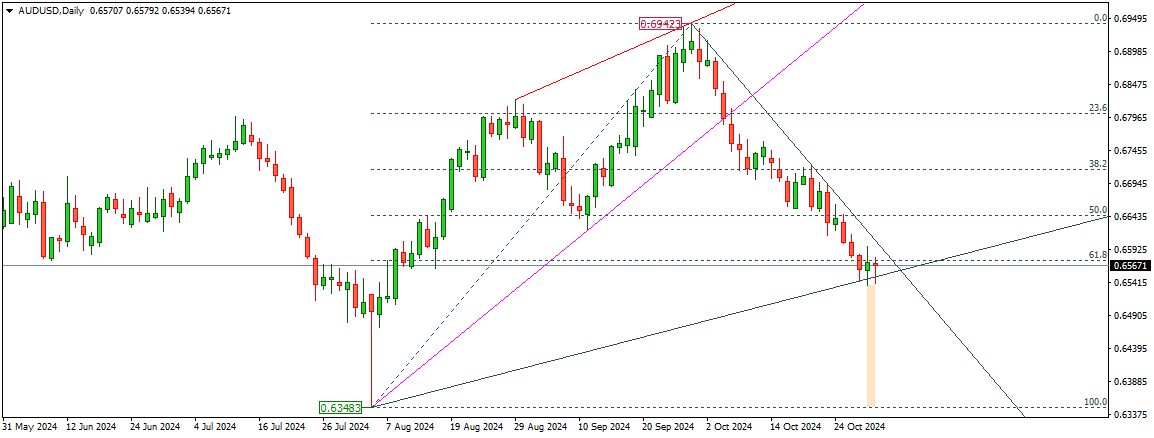
AUD/USD is stabilizing near a fresh 11-week low of 0.6540, driven by a risk-off mood tied to US election uncertainties and softening inflation in Australia. On Thursday, the pair reversed Wednesday’s attempted climb to 0.6600, reinforcing bearish sentiment as it remains under the critical 200-day SMA at 0.6627, indicating continued downside potential.

The Australian Dollar faces additional pressure from mixed signals on China’s economic stability, which underpins Australia’s key exports, such as copper and iron ore. China’s latest stimulus measures and lackluster NBS PMI data raised concerns about the economy’s capacity to rebound robustly, further impacting the AUD.
Australian inflation eased in Q3, with the RBA’s Trimmed Mean CPI down to 3.5% from 4.0% YoY, signaling emerging disinflationary trends. However, the Reserve Bank of Australia (RBA) is still expected to keep rates at 4.35% in its November meeting, with only a 15% probability of a rate cut by year-end and less than a 50% chance by February. This conservative stance sets the RBA apart from other central banks and could limit AUD recovery unless global conditions markedly improve.
While potential Fed rate cuts could lend some support, the AUD’s trajectory remains clouded by US NFP data due Friday and persistent concerns over China’s outlook, which could reinforce downside risk.
Trade Idea:
Short AUD/USD below 0.6540, targeting 0.6500 with a stop loss above 0.6580. Alternatively, wait for sustained consolidation above 0.6627 before considering long positions.