
The Australian Dollar (AUD) rose against the New Zealand Dollar (NZD) on Monday, soon after the consumer inflation stats released. According to statistics, it remained 4 percent this month, compared to 3.6 percent the month before, more than expected by economists i.e 3.2 percent.
The Melbourne Institute’s Consumer Inflation Expectation demonstrates the consumer’s desire for potential inflation in the coming year. The higher the criteria, the more rooted their effect on the RBA’s probability of a rate increase will be. In this way, a high perusing for the AUD should be regarded as positive or bullish, while low preferences are regarded as neutral or bearish.

On the other hand, economists remained optimistic with respect o trade balance data and predicted uprise in the said data by giving a value of 7180 M. It is to be noted that the trade balance represents the difference between import and export levels of the country. Both imports and exports levels stayed in coherence followed by a reasonable domestic demand in terms of imports and an unchanged or improved demand in exchange for exports of the country. So, the pair is believed to start moving positively.
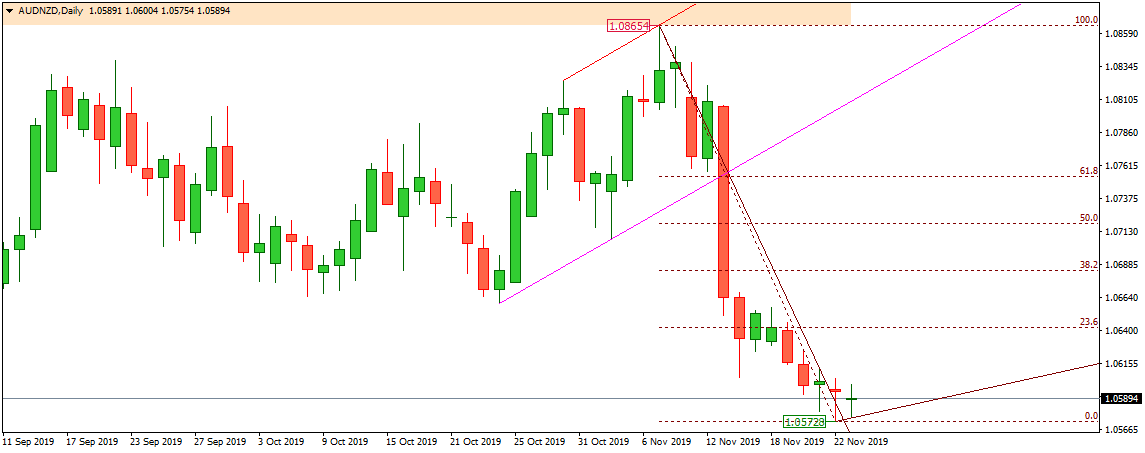
Since last week, the pair has been sinking, as can be seen in the chart above. The pair is quite likely to keep sliding down until or unless a powerful turnaround occurs.
Conclusion
AUDNZD trading may be a better idea for a place in the short term. It may get a reversal of about 1.0641, however, and start to decline again. If this occurs, it may be possible to avoid trading the pair for a long-term position.