
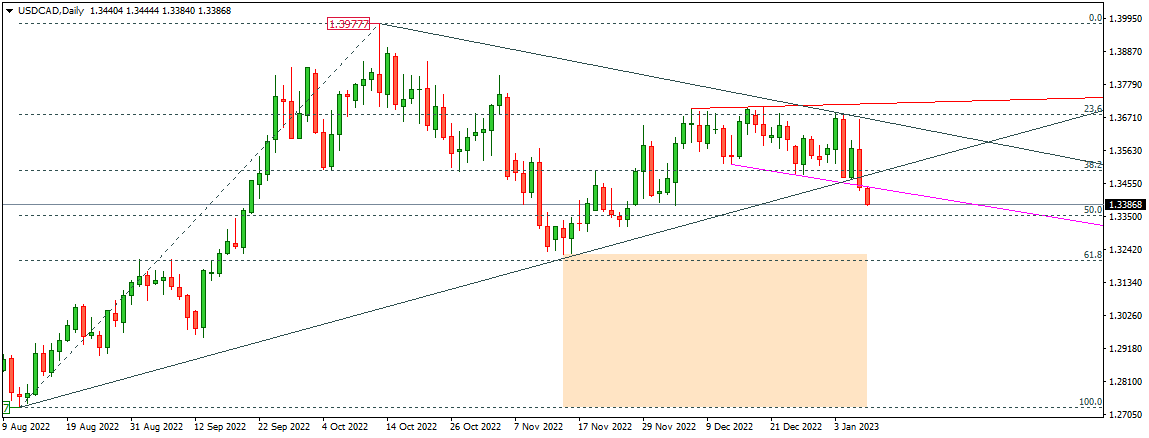
USD/CAD currency pair bears drove the loonie to its lowest level a month into Monday’s European session. Market optimism and rising WTI crude oil prices inspired it.
WTI crude oil buyers poke $75.00 hoping China-inspired confidence will alleviate recession fears and boost energy demand. Black gold prices may have benefited from the weak US Dollar and Russia-related geopolitics.
China reopened its borders, bolstering market optimism. PBOC officials’ pronouncements about China’s robust growth may also improve risk appetite.

Fed hawks may find USD/CAD negative after US data. Compared to market predictions of 200,000 and November’s 256,000, December US Nonfarm Payrolls (NFP) rose 223,000 on Friday (revised from 263,000). Further details of the US December jobs report indicated that the unemployment rate declined to 3.5% from 3.6% in November and the 3.7% projected. Significantly, December average hourly wages rose 0.3% from 0.4% in November, although YoY data declined to 4.6% from 4.8%.
December US ISM Services PMI dipped to 49.6, below market estimates of 55–56. November US Factory Orders decreased by 1.8% after gaining 0.4% in October.
However, Canada’s Net Change in Employment rose by 104K in December, compared to 8K projected and 10.1K earlier, while the Unemployment Rate fell to 5.0% from 5.2% market estimates and 5.1% previously.
Despite contrary facts, Atlanta Federal Reserve bank president Raphael Bostic indicated the US economy is slowing, which lowered US Treasury bond yields and the dollar. US 10-year Treasury rates plummeted 16 bps to 3.56%, the lowest in three weeks, while the US Dollar Index (DXY) plunged the most since November 11.
Wall Street finished strong, supporting S&P 500 futures, lowering the US Dollar, and rising oil prices.
Conclusion
USD/CAD pair traders will need Thursday’s US inflation data, while today’s Canadian Building Permits and Tuesday’s BOC Governor Tiff Macklem’s speech may provide intermediate signals.