
Bitcoin lost 11.1% facing a significant decline in the third quarter, but its year-to-date return remains remarkable at 63.3%. These statistics have been disclosed by a recent NUDIG study. The fact that this decline occurred throughout multiple major financial crises is intriguing. Bitcoin is stabilizing between $25,000 and $31,000. It resists significant up-and-down motions. Stability has persisted despite court judgements, macroeconomic changes, a government shutdown, debt limit debates, and US efforts to create a Bitcoin ETF.
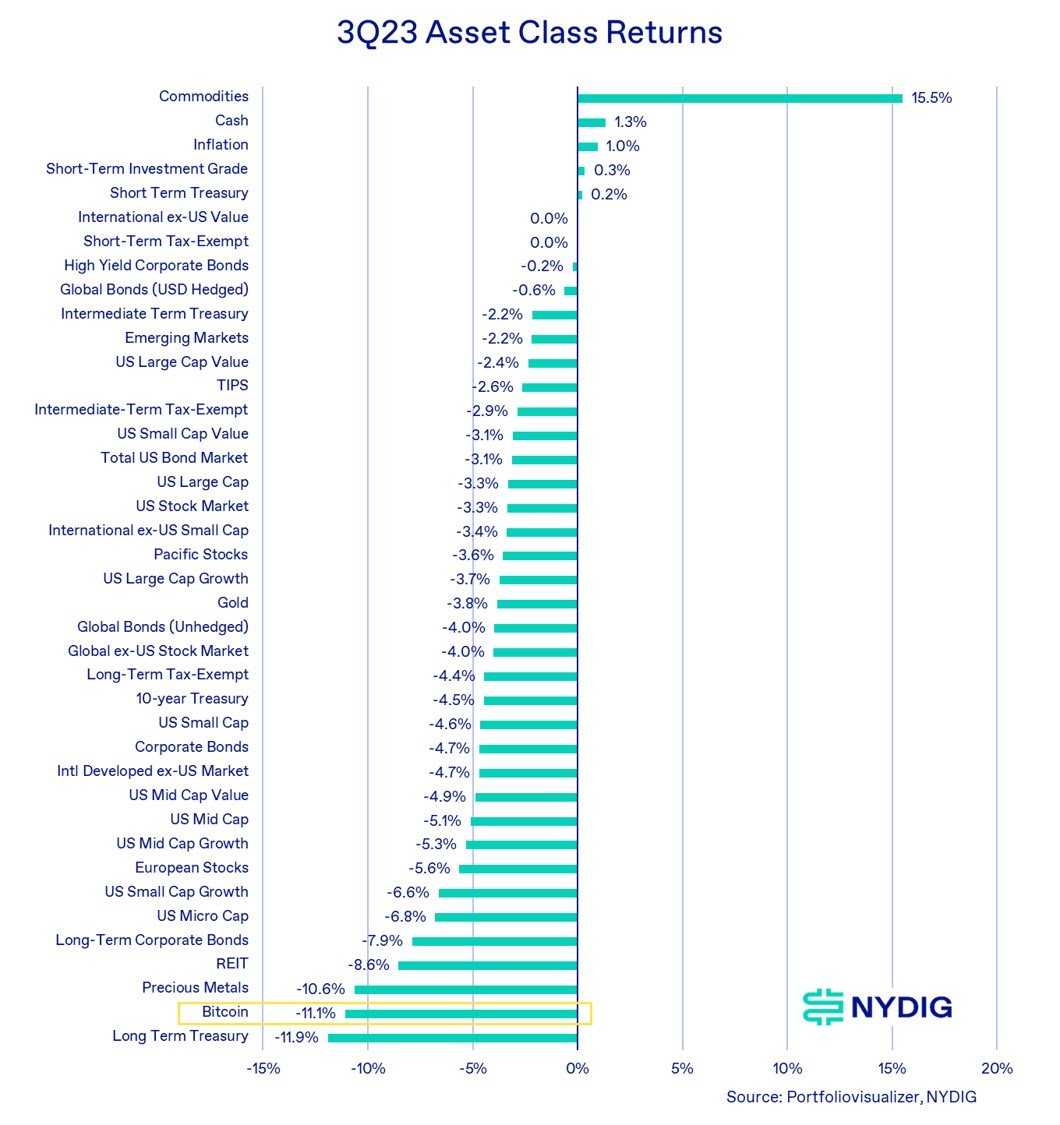
Bitcoin Leads the Pack with 63.3% Year-to-Date Growth

Bitcoin remains the top performer this year, despite its third-quarter performance. This asset surpasses traditional assets with 63.3% year-to-date growth. Stocks have fared well this year despite sliding from July’s highs. High interest rates and inflation caused bond asset classes to make or lose money. Long-term US Treasuries have done poorly this year owing to rising interest rates and credit worries.
Bitcoin’s third quarter has historically been dismal, and this year is no exception. In September, returns dropped, but in October, they rose. Investor indifference, catalyst absence, and “sell in May and go away” affect this trend.
Other assets fell in the third quarter besides Bitcoin. During this time, equities, bonds, gold, and real estate all lost money. Rising interest rates, inflation, and recession worries damage profitability. OPEC+ production curbs raised oil prices from $70 to over $90 per barrel in the preceding quarter before dropping.
The Bitcoin-equities relationship is controversial. Equity correlations rose somewhat in the third quarter due to macroeconomic reasons, although they remain below their mid-2022 peak.
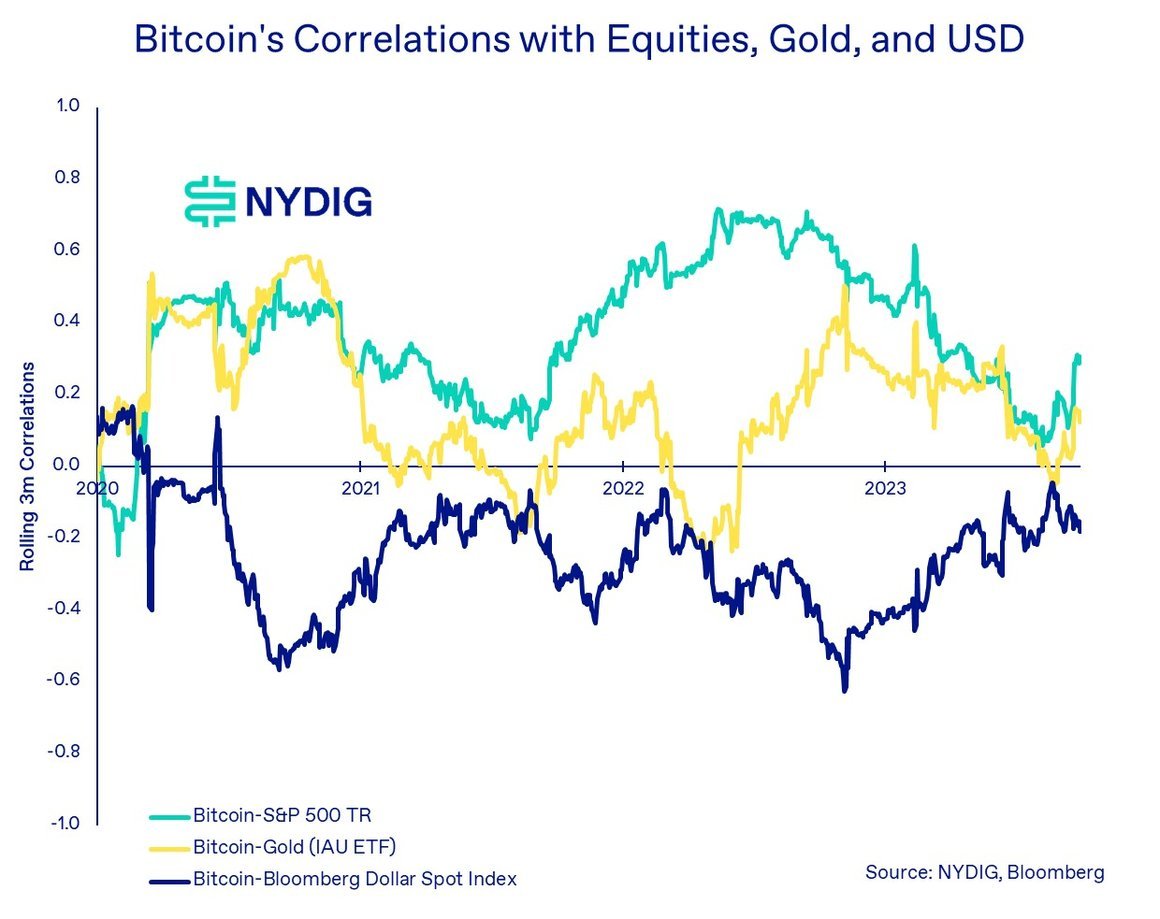
Bitcoin Faces Decline after Weakening Relationship with the US Dollar
Despite social media allegations that the US dollar influences BTC returns, the relationship is weakening. Real interest rate differentials and current account deficits or surpluses affect the US dollar more than other fiat currencies.
Bitcoin declined alongside publicly traded cryptocurrency equities in the third quarter. Compared to Bitcoin mining, cryptocurrency exchanges and large BTC holders did better. Market capitalization-weighted returns rose 1.6% for cryptocurrency firms and fell 22.4% for miners. This is expected given their leveraged business methods.
As the fourth quarter begins, legal processes and industry attempts to secure US spot Bitcoin trading authorization are stressed. Clarifying this issue in the upcoming quarterly report may aid market stagnation.