
The EUR/USD pair experienced significant fluctuations from US economic data releases and shifting market sentiments. After releasing US Gross Domestic Product (GDP) data for the first quarter, EUR/USD initially fell sharply, breaching the key 1.0700 level before rebounding. However, the rebound was limited as the GDP Price Index indicated stubbornly high inflation, leading to expectations of prolonged higher interest rates by the Federal Reserve (Fed). This boosted the US Dollar (USD) against the Euro (EUR), with market probabilities now favoring a potential rate cut in September.
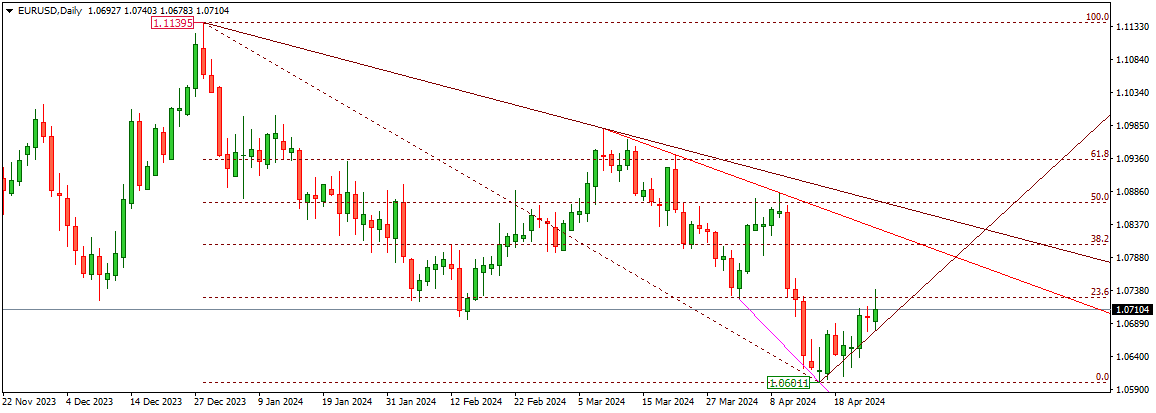

Other US data, such as Initial Jobless Claims and Pending Home Sales, also showcased positive trends, supporting the USD. However, the USD’s responsiveness to positive data has diminished, possibly due to already factored-in expectations regarding interest rate shifts. Analysts at Commerzbank noted that the Dollar has priced in a lot, making it more sensitive to “bad news” than “good news.”
Amidst these developments, the Euro found stability following strong Services PMI data, hinting at potential inflationary pressures in the services sector. While a rate cut by the European Central Bank (ECB) in June remains likely, ECB officials have expressed caution, citing persistent services-sector inflation and the need for sustainable inflation declines before committing to rate paths.
Trade Idea:
Consider monitoring EUR/USD for potential short-term fluctuations based on US economic data releases and shifting market sentiments while staying mindful of ECB and Fed policy announcements influencing the currency pair.