
After Spanish inflation jumped by more than expected in January, the EUR/USD pair went back up to 1.0900. In Q4, Germany’s economy went down, which hurt the Euro.
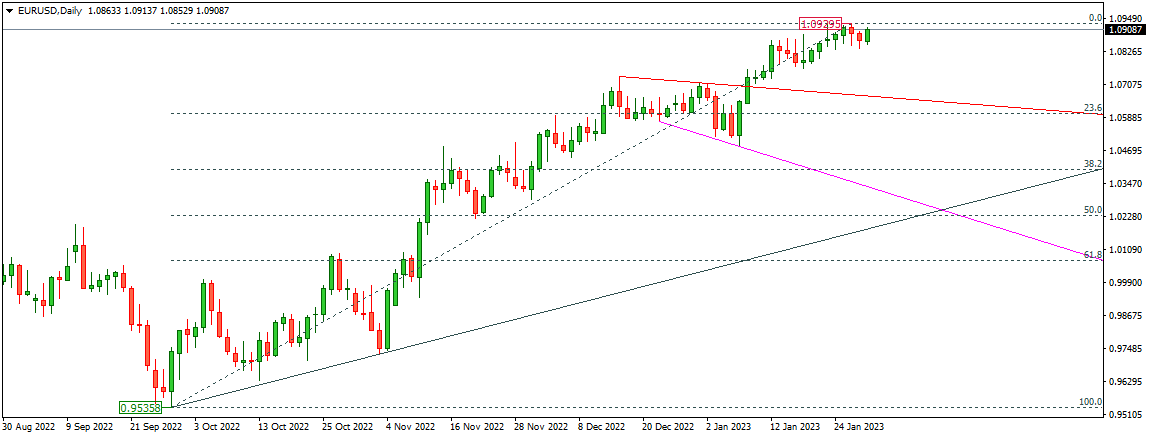

Friday, EUR/USD broke below the rising regression channel that had been in place since early January. It then used the lower level of the channel as resistance. The Relative Strength Index (RSI) dropped below 50, which shows that the short-term trend is going down.
After a nearly flat week, the EUR/USD fell to 1.0850 early on Monday. Based on how the two currencies work together, buyers should wait. In the afternoon, when there are no major US data releases, the pair may move based on how people feel about risk.
Due to the cautious mood on the market at the start of the week, the US Dollar Index has stayed around 102.00. European morning US stock index futures are down 0.5% to 0.7% because people are afraid of taking risks.
The fourth-quarter GDP numbers for Germany will be released later by Destatis. In the fourth quarter, the German GDP is expected to grow by 1.3%, the same as in the third quarter. Investors won’t pay attention to German GDP numbers until the European Central Bank (ECB) makes policy announcements later this week.
The business and consumer confidence numbers for January will be on the agenda for the European economy. The Economic Sentiment Indicator and the Consumer Confidence Index could go up a little.
Conclusion
The Dallas Federal Reserve Bank will put out the Texas Manufacturing Survey for January. Investors will also keep an eye on the main indexes on Wall Street. If US stocks drop sharply this week after rising last week, the US Dollar may stay strong and keep EUR/USD from going up.