
The EUR/USD currency pair dipped to 1.0700 earlier in the day but recovered. The US dollar’s broad gains and “risk-off” mentality may weaken the pair, notwithstanding low Treasury yields. The Lagarde speech and US retail sales.
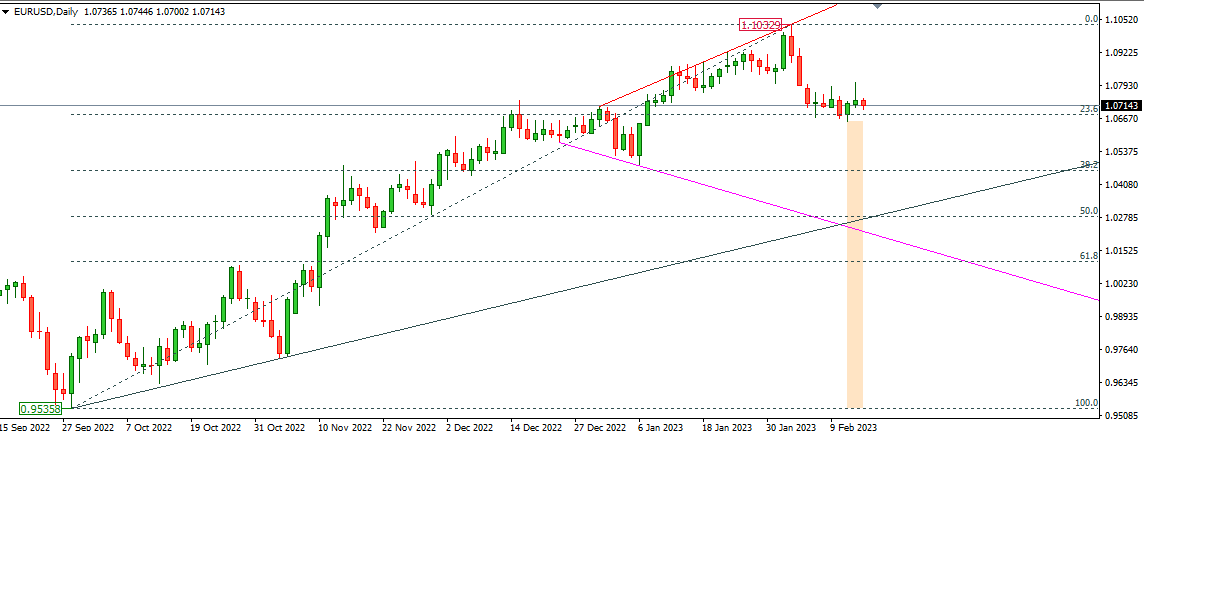
By midweek, the EUR/USD plummeted to 1.0700 after Tuesday’s knee-jerk reaction to US inflation data. If market sentiment doesn’t improve, the pair’s near-term technical picture implies buyers aren’t interested and will keep sliding.

The annual Consumer Price Index (CPI) dropped from 6.5% in December to 6.4% in January, the US Bureau of Labor Statistics reported on Tuesday. The market expected 6.2% less. Core CPI, which excludes variable items like food and energy, rose 0.4% monthly as expected. The Fed’s core services inflation measure was 7.2% per year.
The markets interpreted these statistics to suggest that deflation did not accelerate in January and that the Federal Reserve presumably won’t modify its policy. After hiking the policy rate 25 basis points in March, the CME Group FedWatch Tool judged it less likely that the US central bank would maintain it in May. The CPI statistics reduced the possibility from 20% to 16%.
The Fed’s hawkish wagers and rising Treasury bond yields keep the US Dollar Index over 103.50. US market index futures fell 0.4%–0.7%. The US Dollar benefits from investors’ risk aversion.
Europe’s economic data includes December’s Industrial Production. Unless this knowledge shocks them, they won’t act. US January Retail Sales will energise the afternoon. Retail sales are expected to rise 1.8% in January after falling 1.1% in December. A strong print could support the US Dollar, and vice versa.
Conclusion
Wall Street’s leading indices will also be watched. If US markets open with huge losses and keep falling, EUR/USD may continue down in the afternoon.