
The Pound Sterling (GBP) continues its downward correction against most of its peers in Friday’s New York session. This slide follows the release of weaker-than-expected Retail Sales data for June by the United Kingdom’s Office for National Statistics (ONS).
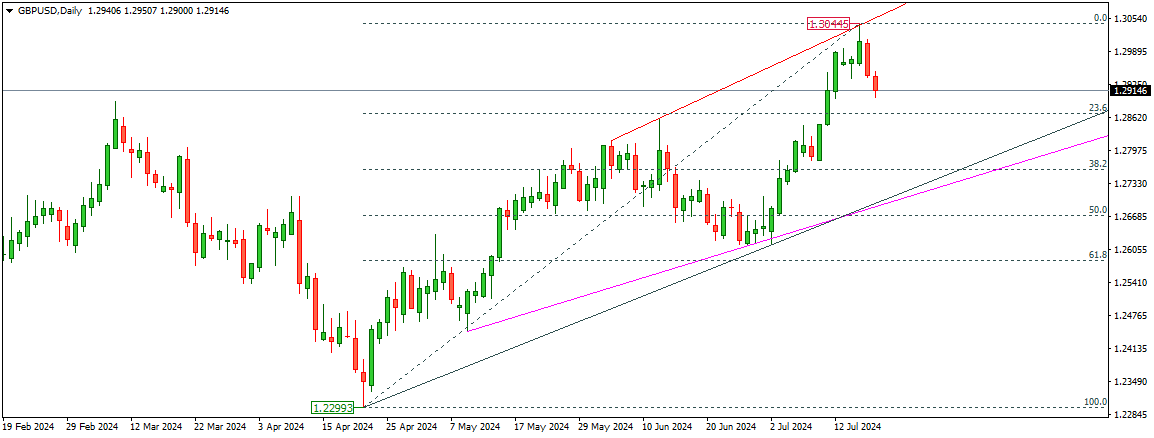

The ONS report indicated that monthly Retail Sales contracted by 1.2%, exceeding economists’ estimates of a 0.4% decline. This is a sharp contrast to the 2.9% growth seen in May. On an annual basis, retail receipts dropped by 0.2%, contrary to expectations of similar growth. The decline was observed across all retail sectors except those offering automotive fuel. Retail Sales data is a crucial indicator of consumer spending, and a significant drop suggests that UK households are struggling with the burden of higher interest rates imposed by the Bank of England (BoE). Despite these challenges, individuals may not see any relief from high-interest obligations as uncertainty remains over potential BoE rate cuts in August.
BoE officials are hesitant to move towards policy normalization due to persistent inflationary pressures, particularly in the service sector, as evidenced by the sticky US core Consumer Price Index (CPI).
Additionally, the anticipated slowdown in Average Earnings data for the three months ending in May—a key measure of wage growth driving service inflation—fails to boost expectations for BoE rate cuts in August. The current pace of wage growth remains higher than what is needed to align with the BoE’s target for controlling price pressures.
Trade Idea:
Consider short positions on GBP/USD around the 1.2900 level, targeting 1.2800, given the weaker Retail Sales data and ongoing uncertainties regarding BoE rate cuts. Monitor UK economic indicators and BoE statements for further direction.