
Gold enjoys a great deal of attention owing to its intrinsic value and the role it plays in the consumer and investment world. The metal enables its owner to store a certain amount of money within a limited space, which is precisely why many individuals prefer keeping gold with themselves. In fact, the metal offers protection during inflationary times and can also be used during economic downturns, when the value of paper currencies drops significantly. However, many developed countries have stopped using gold as the primary currency but the metal continues to affect the value of forex currencies in a major way. Here, find out how gold affects currencies on different foreign exchanges.
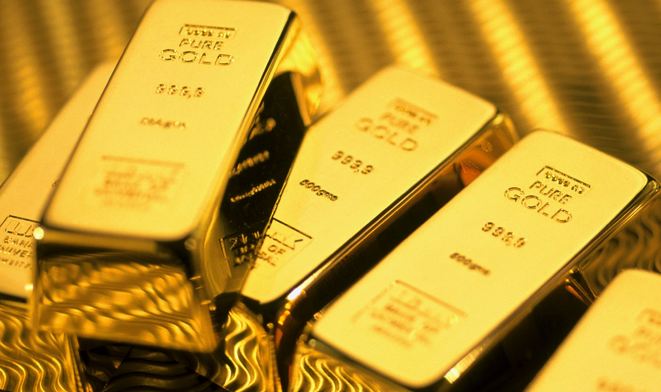 1. Gold Once Supported Fiat Currencies: During the Byzantine period, gold was extensively used for supporting fiat currencies as well as other currencies that were used in different nations. In fact, the metal was utilized as the global reserve currency throughout the twentieth century. During the 1940s and until the 1970s, gold was used for determining the actual value of some of the prominent currencies of the forex world as per the Bretton Woods exchange rate system. Even in the U.S., gold was used as the standard currency until 1971 after which President Richard Nixon passed orders for discontinuing it. This was primarily because countries with limited supply of gold couldn’t print more fist currencies until they acquired gold in equal amounts.

2. Hedging Against Inflation: Forex investors purchase gold in huge quantities every time their nation is witnessing high inflationary pressures. During inflation, gold experiences huge demand, simply because of its higher intrinsic value and short supply. Besides, gold can’t be diluted and is capable of retaining its value in comparison to other countries. For instance, in the month of April in 2011, many investors were scared to witness a drop in their fiat currency. As a result, many of them started purchasing gold, which further drove the metal’s price as high as fifteen hundred dollars per ounce. This clearly suggests that investors had little faith in the currencies of the world and did not expect the economy to stabilize either.
3. Gold Prices Impact Nations that Export and Import the metal : A country’s currency value is correlated to the value of its exports and imports. Thus, every time a nation imports in excess of it exports, its currency’s value declines. Similarly, the value would go up when the nation exports more. Hence, a nation that is exporting gold or is having access to gold reserve shall witness increased currency strength every time the prices of gold go up, as it enhances the nation’s total export value. Thus, an improvement in gold prices results in a surplus of trade and helps in offsetting trade related deficit. On the flip side, nations that import the metal in large quantities are most likely to witness a drop in their currency value as and when the gold prices rise. For instance, nations that are specialists in manufacturing products or items made up of gold but have limited gold reserves will import gold in large quantities and hence they are more likely to get affected by increased gold prices.
Related : Factors Affecting Gold Prices Fluctuation
4. A Currency’s demand and supply is affected with the Purchase of Gold: When the central bank of any nation purchases gold, it automatically impacts the demand and supply of that country’s currency and may further cause inflation. This happens because banks print more money for purchasing gold, which further results in excessive supply of that particular currency.
5. The Price of Gold is used for measuring a Currency’s Value: Even though the prices of gold and the fiat currency’s value are correlated, there isn’t an inverse relation between them as many individuals often assume. For instance, if an industry requires the metal for production purpose in higher amounts, this would result in an increase in gold prices. However, this would convey nothing regarding the nation’s currency, which could also be higher during the same period. Hence, while the gold price are used for determining US Dollar’s value, it is equally important for investors to analyze the conditions to figure out whether an inverse relation exists or not.
To sum up, gold impacts the value of forex currencies in a major way. Despite the fact that gold is no longer used as a standard, the metal can easily function in the form of a substitute for global currencies. In fact, many economists are of the opinion that gold should be used as a standard owing to USD’s and other currencies volatile nature. Thus, it goes without saying that the metal shall continue to perform a major part in the forex market. Besides, many investors prefer gold as it can be utilized for hedging during inflation. Hence, investors need to keep a track as well as analyze the prices of gold in order to determine the actual value of both the international and local economies.