
Gold futures rose nearly one percent during the US session to see their rebound for the third session in five sessions from its lowest since July 12 of the previous year 2017 amid the rebound of the dollar index for the third session in five sessions of the highest since 14 of the same month according to Of the inverse relationship between them and on the eve of disclosure of data on the US housing market on Wednesday.
Gold futures for December delivery rose 0.63% to currently trade at $ 1,242.40 per ounce compared to the opening at $ 1,234.60 an ounce, amid the decline of the US dollar index by 0.23% to 94.39 levels compared to Opening at 94.61.

Investors are now looking closely at the US economy, the world’s largest economy, to release housing data as the June housing sales index is expected to drop 3.1% to 668,000 from 6.7% 689 thousand homes last May.
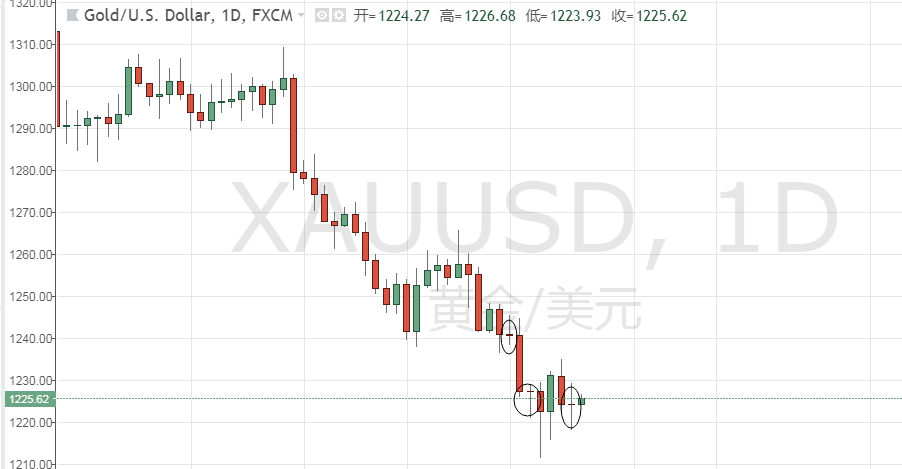
Gold chart
In addition, we have followed this week the World Gold Council revealed its expectations for a rise in the demand for the yellow metal during the second half of the year 2018, due to the high inflation rates and the repercussions of the possible trade war and its impact on currencies, Despite the escalation of global trade tensions, gold did not rise during the first half of this year due to the strength of the US dollar.
The strength of the greenback is due to growing market expectations for a faster rate hike in federal funds this year following the strength of US economic data. The Council noted that demand for the yellow metal is likely to rise in the second half of the year with The tendency to use gold as a tool to hedge inflation, in addition to the recent decline in prices support the increasing demand for gold.
The World Gold Council recently reported a 7% drop in global demand for the yellow metal in the first quarter of 2018 to 973.5 mt, the lowest demand since the first quarter of 2008. The decline in demand for gold was led by the sector Investment, explaining that the total investment in the yellow metal fell 27% to 287 metric tons against 393 metric tons in the first quarter of 2017.
The World Gold Council also reported that investment in bullion and gold coins also declined in the first quarter by 15%, while central banks’ demand for gold rose 42% to 116.5 mt, particularly with Russia’s demand for yellow metal rising, At 487.7 mt during the first quarter, in conjunction with the growth of the supply of mines 1% on an annualized basis during the last quarter to about 770 metric tons.
Gold holdings at SBS-D-Er Gold Trust, settled on Tuesday, flat from Monday’s total of 802.55 mt, its highest level since the third July. Gold prices fell 5.4% in the second quarter, their second quarterly loss in the last three quarters.