
After going up the most in a week, the NZD/USD pair is at 0.6260-70 as the European session on Thursday begins.
The NZD/USD pair also liked how the Fed pushed the USD down before recession fears and pre-data jitters made bulls nervous. Mixed mood data from New Zealand has also made it hard for the pair to move recently.

The New Zealand ANZ Activity Outlook for July went from -9.1% to -8.7%, but Business Confidence went from -62.6 to -56.7. Reuters reported that ANZ said businesses knew the Reserve Bank was trying to lower customer demand to stop inflation, so their fear was understandable.
The kiwi could go up to 0.6305 if momentum in the short term gets better. Weak upward momentum makes it unlikely that the price will stay above 0.6305 for long. As long as the New Zealand dollar remains above 0.6195, there will be a slight push-up.
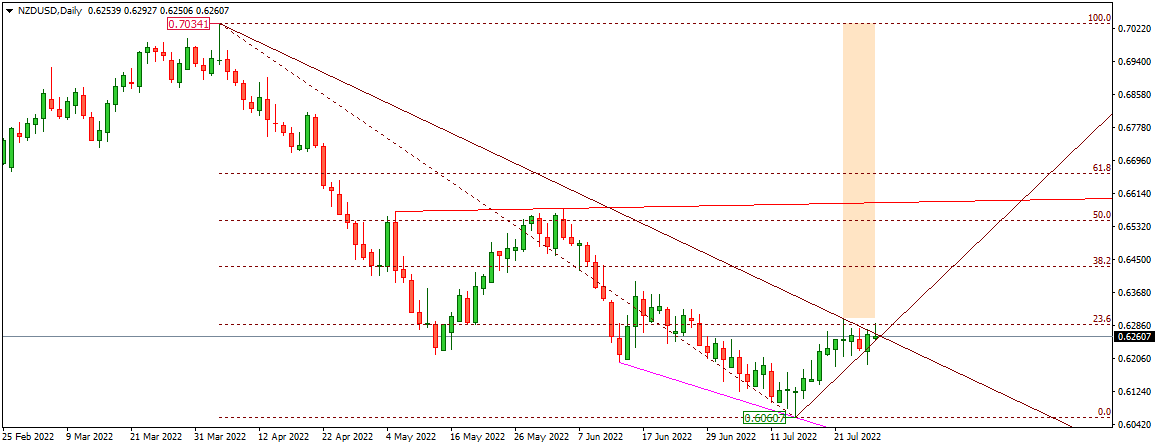
Reevaluations of Fed Chairman Jerome Powell’s net neutrality signals and the US 2-year and 10-year Treasury rates are still inverted, which is a sign of an upcoming recession, seem to have made people less willing to take risks and pushed up the price of the NZD/USD.
The cautious tone before the virtual meeting between US Vice President Joe Biden and China’s President Xi Jinping and the flash readings of US Q2 GDP Annualized make it hard for NZD/USD buyers to decide.
Conclusion
NZD/USD buyers were encouraged by the poor performance of the US dollar from the Fed’s signals of a slower rate rise and the weak state of the US economy.