
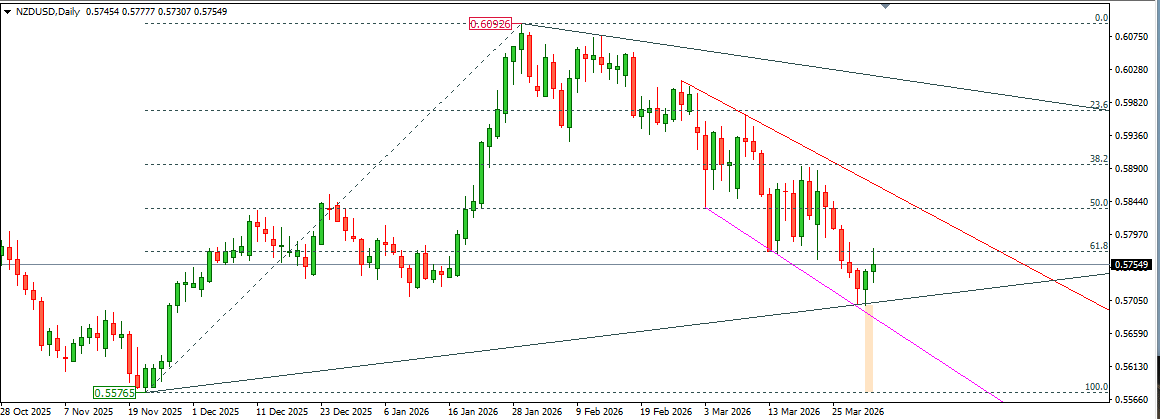
NZD/USD gives up its modest Asian session gains after rising toward the 0.5760 area, reversing part of the previous day’s recovery from a four-month low. The pair has resumed its downward pressure and remains vulnerable to extending the broader downtrend that has been in place for the past two months.

Market optimism following comments from US President Donald Trump — suggesting that the United States could wind down hostilities with Iran within two to three weeks — has proven limited. Reports that the UAE is pushing for military action to reopen the Strait of Hormuz, along with continued US troop deployments in the Middle East, are keeping geopolitical risks elevated. This environment is supporting inflation expectations and reinforcing bets that the Federal Reserve may keep interest rates higher for longer, which continues to support the US Dollar and pressure NZD/USD.
On the New Zealand side, the Reserve Bank of New Zealand is expected to delay interest rate hikes until the fourth quarter, as policymakers remain concerned that prolonged high energy prices could slow economic growth. This cautious policy outlook is weighing on the New Zealand Dollar.
In addition, weaker economic data from China is adding further pressure on the Kiwi. Manufacturing PMI data showed that China’s factory activity slowed in March, highlighting a fragile recovery in the world’s second-largest economy. Since New Zealand’s economy is closely tied to Chinese demand through trade, weaker Chinese data typically has a negative impact on the New Zealand Dollar and other commodity-linked currencies.
Overall, the combination of strong US Dollar demand, rising Fed rate expectations, geopolitical uncertainty, and weak Chinese data supports a bearish near-term outlook for NZD/USD. However, traders may remain cautious ahead of key US data releases, including the ADP employment report, Retail Sales, ISM Manufacturing PMI, and the upcoming Nonfarm Payrolls report.
Trade Idea:
Sell NZD/USD below 0.5750 targeting 0.5670. Strong USD and weak China data may keep pressure on the pair unless risk sentiment improves significantly.