
Oil prices kept their gains as the US market opened on Tuesday as the market focused on Iran’s supplies, especially after OPEC expressed concern over shortages before an important meeting in Algeria, overshadowing fears of a full-scale trade war between the United States and China.
By 12:59 GMT the US crude rose to $ 69.80 a barrel from the opening level $ 68.79, and recorded a high level of 69.93 $, and the lowest level of 68.52 $.

Brent crude oil rose to $ 79.05 a barrel from the opening level of $ 77.71, and recorded a high of $ 79.35, and the lowest level of $ 77.48.
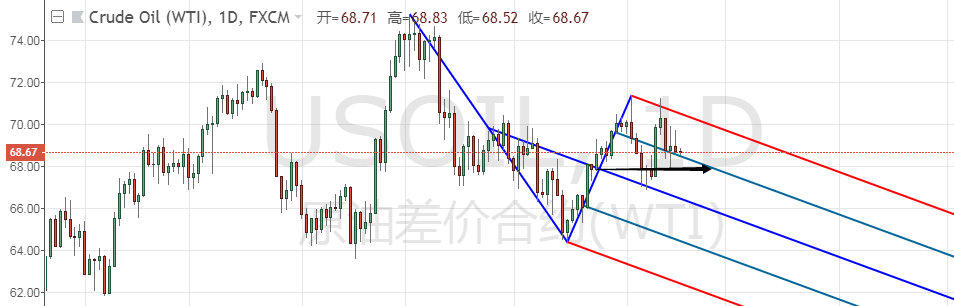
US crude oil lost 0.3% on Tuesday, the second loss in three days, and Brent contracts lost 0.2%, the third daily loss respectively, on fears of worsening trade disputes between the United States and China.
Global oil prices rose 1.5% on average last week, the third weekly gain in a month, with strong signs of slowing supply in the United States, as well as the easing of global trade frictions.
According to Bloomberg, a senior official of the Organization of the Petroleum Exporting Countries (OPEC) said that the Organization is concerned about the threat of supply of crude from OPEC’s top producers, led by Iran.
OPEC and non-OPEC producers are scheduled to meet on Sunday to discuss all possible scenarios for oil production, Russian Energy Minister Alexander Novak said.
United States imposed some sanctions on Iran last August and called on countries to stop buying oil from Iran. Indeed, some major Asian countries, especially Japan and South Korea, have stopped importing Iranian oil. India has cut Iranian crude purchases by half this month.
Full US sanctions are due to take effect on Nov. 4, which means further declines in Iran’s exports, which OPEC and its allies are trying to develop alternatives to offset the expected supply shortfall in the market.
Bank of America Merrill Lynch said in a reminder to customers that Iran’s crude oil exports have fallen 580,000 barrels per day in the past three months.
Meanwhile, US President Donald Trump said after the closure of US markets on Monday to impose a new customs duty of 10% on Chinese imports by about $ 200 billion, and increase to 25% starting next year.
For its part, China promised, according to the Ministry of Commerce, to respond to the new American measures and said “it has no choice but to respond.”
The decisions are expected to lead to a comprehensive trade war that will limit economic activity in both countries, which would reduce the growth of oil demand in its largest consumers in the world.