
As Asian trading starts, EURUSD is getting close to 1.0300. After hitting its low on Friday, the asset has attracted buyers and may now focus on how people feel about risks. The risk profile isn’t under stress, which should help currencies that are seen as riskier.
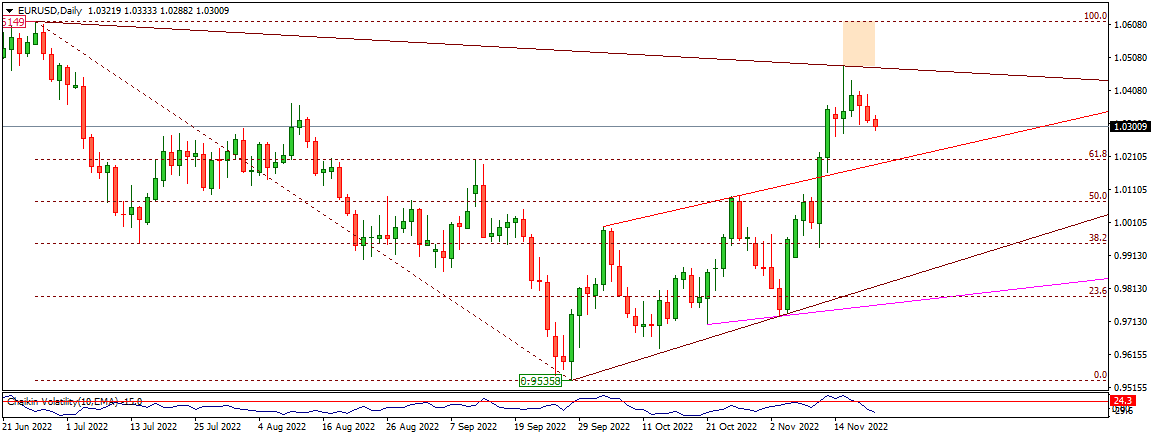

Friday was a good day for the S&P500 because the chances of a Fed rate hike are low (Fed). The headline inflation rate of 7.7% worries people who work in the stock market. Last week, Reuters said that Susan Collins, president of the Fed Bank of Boston, said the US central bank needs to do more to lower inflation. He went on to say, “The Federal funds rate will need to go up, and then it will need to stay high for a while.”
Christine Lagarde, president of the European Central Bank (ECB), told the European Banking Congress that the central bank is committed to lowering medium-term inflation to 2% by raising interest rates.
The October Existing Home Sales data are on the US economic calendar. In October, the number of housing starts and building permits both went down by 4.2% and 2.4%, respectively. Investors were reminded by these numbers of the crisis in the housing market, which helped the EURUSD limit its losses.
Sales of already-owned homes could drop by 0.1%. If this data drops a lot, it could hurt the USD before the weekend and help the EURUSD.
Today, US stock futures are down. If Wall Street’s main indexes drop after the morning bell, EURUSD may have trouble, and vice versa.
Conclusion
According to data released Friday by Reuters and the US Commodity Futures Trading Commission, net positioning turned net short for the first time since mid-July 2021. This opens up space for shorts.