
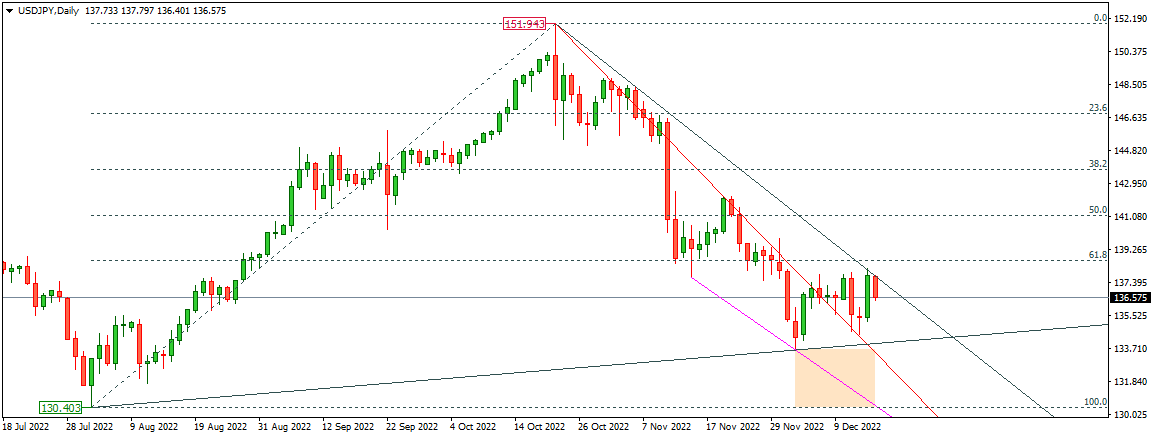
Early Friday morning in Europe, the USD/JPY pair goes up to 137.40. The Yen pair bounces back from Tuesday’s support line that went up. The recovery moves aim for the rising resistance level near 138.10 on December 7.
 f
f

The current account deficit in the third quarter and the slowing economy hurt the value of the Japanese Yen. A strong comeback in US Treasury bond yields also makes the difference between the US and Japan rates bigger, which makes JPY flows even worse. It helps people buy USD/JPY near 136.25.
But weak demand for the US Dollar stops the intraday rise near 137.25. Expectations that the Fed will stop tightening its policies keep USD bulls on the defensive and keep USD/JPY from going up. But the good news about the economy as a whole in the US has led to rumours that the Fed may raise rates sooner than expected.
It keeps traders from making risky bets on USD/JPY, so prices stay in a narrow range. So, the December 13-14 FOMC meeting will be the most important. The latest data on US consumer inflation will affect the Fed’s policy outlook and increase demand for the USD before today’s important central bank event.
It will affect the next move in the USD/JPY pair. On Thursday, early in the North American session, traders will look at the US Weekly Initial Jobless Claims data.
Conclusion
How likely it is to trade USD/JPY in the short term will depend on this, the yields on US bonds, and how the market feels about risk.