
The Canadian dollar is recording a modest gain against several of its major currency rivals, including the US dollar and the euro. The loonie has seen some of its momentum dissipate this summer, although it remains up about 1% year-to-date. Can the buck squeak out some gains to close out the month of August?
According to Statistics Canada, the producer price index (PPI) surged 15.4% year-over-year in July, down from the 17.2% spike in June. On a month-over-month basis, producer prices fell for the first time since November, sliding 0.4%, thanks because of the substantial decline for softwood lumber prices. However, most of the key materials, such as iron, steel, energy, petroleum, and metals, advanced last month.

Raw material prices soared at an annualised rate of 37.7% in July, slightly down from the 38.1% increase in the previous month. On a monthly basis, raw material prices jumped 2.2%. Most of the gains were attributed to crude oil, crops, and live animals.
Ottawa reported that that the current account surplus clocked in at $3.58 billion in the second quarter, coming in higher than the market forecast of $1.85 billion. This is the second quarter in a row of current account deficits, reversing the 12-year trend of perpetual current account gaps.
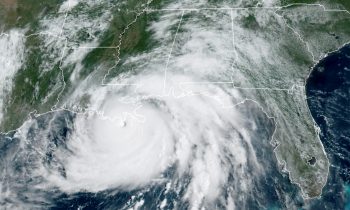
Energy commodities also came into focus for the loonie, particularly in the aftermath of Hurricane Ida in Alabama, Louisiana, and Mississippi.
 October West Texas Intermediate (WTI) crude oil futures tumbled $0.45, or 0.65%, to $68.29 per barrel on the New York Mercantile Exchange. October natural gas futures shed $0.107, or 2.48%, to $4.279 per million British thermal units (btu).
Since Canada primarily maintains a current account deficit, economic growth is dependent on exports. Because oil and gas are the country’s top shipments, any price change can impact the loonie and the broader economy.
The Canadian bond market was mostly in the red, with the benchmark 10-year yield down 0.003% to 1.205%. The one-year bill slipped 0.015% to 0.265%, while the 30-year bond was unchanged at 1.756%.
The USD/CAD currency pair tumbled 0.24% to 1.2593, from an opening of 1.2625, at 13:53 GMT on Monday. The EUR/CAD dropped 0.25% to 1.4849, from an opening of 1.4909.