
The USD/CAD currency pair has bounced back from the mid-1.3600s, marking a two-week low earlier this Wednesday and halting a five-day losing streak. It shows signs of recovery currently hovering around the 1.3675-1.3680 region.
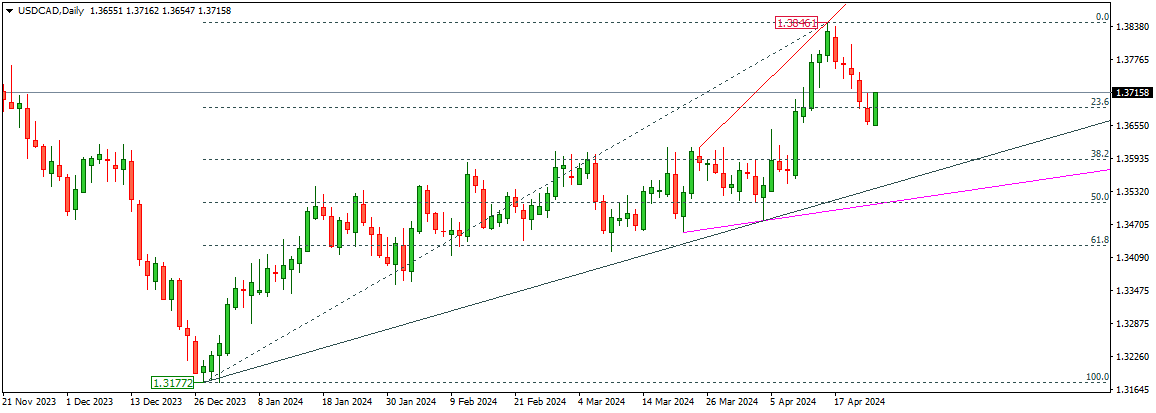

Factors contributing to this rebound include the struggle of crude oil prices to capitalize on the previous day’s rebound from the 50-day SMA support. This is due to easing geopolitical tensions and concerns about slowing economic growth in China. Additionally, expectations of a Bank of Canada interest rate cut in the summer amid declining inflation and slower economic growth have weakened the commodity-linked Loonie, favouring the USD/CAD pair. The emergence of USD dip-buying due to delayed Fed rate cuts until September and reduced expectations of rate cuts in 2024 (now predicted to be two) have also bolstered the USD.
However, a generally positive risk tone in the market could limit fresh bullish bets on the USD and hinder the USD/CAD pair. Investors are cautious ahead of key US macro data releases, starting with Durable Goods Orders later today, followed by the Advance US Q1 GDP report and the PCE Price Index on Thursday and Friday. These reports will offer insights into the Fed’s rate cut trajectory, influencing near-term USD dynamics and determining the next directional move for the USD/CAD pair.
Trade Idea:
Monitor USD/CAD for potential long positions post-economic data releases, considering the impact on Fed rate cut expectations and USD strength.