
By the end of New York trading, the USD/JPY had dropped to 143.90 because US yields had dropped overnight after the BoE bought bonds. As bulls gave up before the end of the month, bond rates around the world fell, stocks went up, and the currency fell.
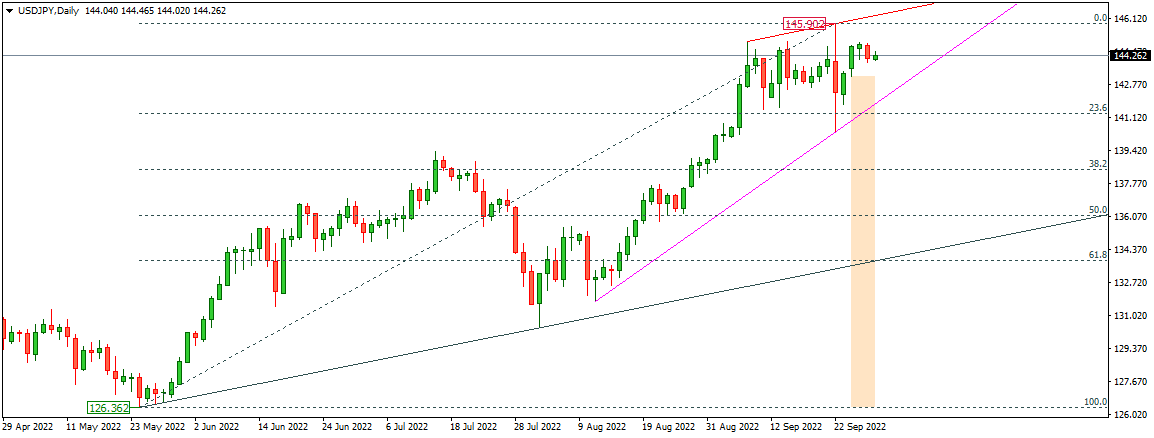

The USD/JPY pair stays in a tight range during the early European session on Wednesday.
The minutes from the Bank of Japan’s meeting in July showed that officials agreed to look into how the recent drop in the value of the yen could affect inflation. This is because the government took direct action to stop the rapid decline of the local currency. This helps the Japanese yen, which is a headwind for USD/JPY.
BoJ stands by its ultra-lose policy. On Tuesday, Fed policymakers talked more like hawks and made it clear that they want to raise interest rates more quickly to stop inflation. This is a big difference in policy between the Fed and the BoJ, which hurts the JPY and helps the USD/JPY.
The US dollar hits a high not seen in 20 years because of the Fed’s hawkishness. A further rise in the yields on US Treasury bonds makes the greenback a better buy and limits the USD/JPY pair’s drop. Fundamentals point to gains soon, but the failure to break through 145.00 calls for caution.
Conclusion
Market traders are waiting for the US Pending Home Sales report to come out early in the North American session. Traders will also listen to what Federal Reserve Chair Jerome Powell says. Both of these things affect the USD. The USD/JPY should also go up if people feel like taking risks.