
The Russian ruble is extending its weakness this month amid concerns about the economic consequences of Western sanctions and sliding energy commodities. Despite an impressive performance over the last 12 months, the ruble has weakened against the US dollar and the euro. Does the latest slump impact the Wall Street consensus that Moscow is in store for noteworthy economic growth?
Reports suggest that President Joe Biden will announce new sanctions on Russia over accusations of electing meddling and cyber hacking. The sanctions could range from preventing Moscow from issuing sovereign debt to freezing American assets owned by Russian officials.

Kremlin officials have rejected allegations of US election interference, a cyber hack that penetrated US government networks, and placing bounties on US troops serving in Afghanistan. For a country that continues to recover from the coronavirus-induced financial crisis, Western sanctions could hamper the nation’s recovery efforts.
US experts believe this will discourage President Vladimir Putin in the long run, with Dan Fried, a former top US diplomat for Europe, telling Reuters:
If he sees that there will be a strong and organized response from the West, that will enter into his calculations. We know from Soviet history that sustained pressure over time, combined with internal stagnation … both political and economic can lead to a strategic reassessment by Russia’s leaders.
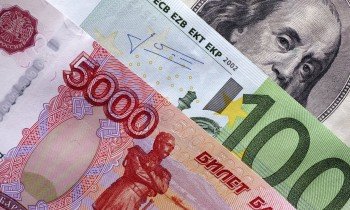 In other news, the Bank of Russia raised interest rates for the first time in two years on Friday. Governor Elvira Nabiullina hiked the benchmark lending rate from 4.25% to 4.50% and hinted that more policy tightening could be on the way. Most economists did not anticipate the move, but they understood rising inflation levels prevalent throughout the economy.
Ivan Tchakarov, chief Russia and CIS economist at Citibank, said in a research note:
The decision was justified by pointing to still robust inflation pressures and elevated inflation expectations against the background of green shoots of economic recovery. This would indeed be consistent with a speedier return to a neutral policy stance, thus justifying expectations that more rate hikes will ensue in the months to come.
Falling energy prices are further weighing on the ruble and the broader economy. May Brent crude oil futures plunged $2.76, or 4.27%, to $61.86 per barrel. May natural gas futures erased $0.045, or 1.72%, to $2.574 per million British thermal units (btu).
The USD/RUB currency pair rose 1.71% to 76.06, from an opening of 74.78, at 17:23 GMT on Tuesday. The EUR/RUB advanced 1.11% to 90.26, from an opening of 89.25.