
AUDCAD has been consolidating within a well-defined symmetrical triangle formation over the past several months, with converging trend lines creating a narrowing trading range as the pair approaches a critical decision point near the 0.89718 level.
The symmetrical triangle pattern is clearly visible, with the upper resistance line (black descending trend line) connecting the series of lower highs since May, while the lower support boundary has been formed by ascending higher lows. This compression indicates that market participants are becoming increasingly indecisive, setting the stage for a potentially significant breakout.

Currently trading near the upper portion of the triangle, AUDCAD appears to be testing the resistance zone around 0.90000. A decisive break above this level could trigger a rally toward the next major resistance area near 0.90500-0.91000, where previous swing highs have provided meaningful overhead pressure.
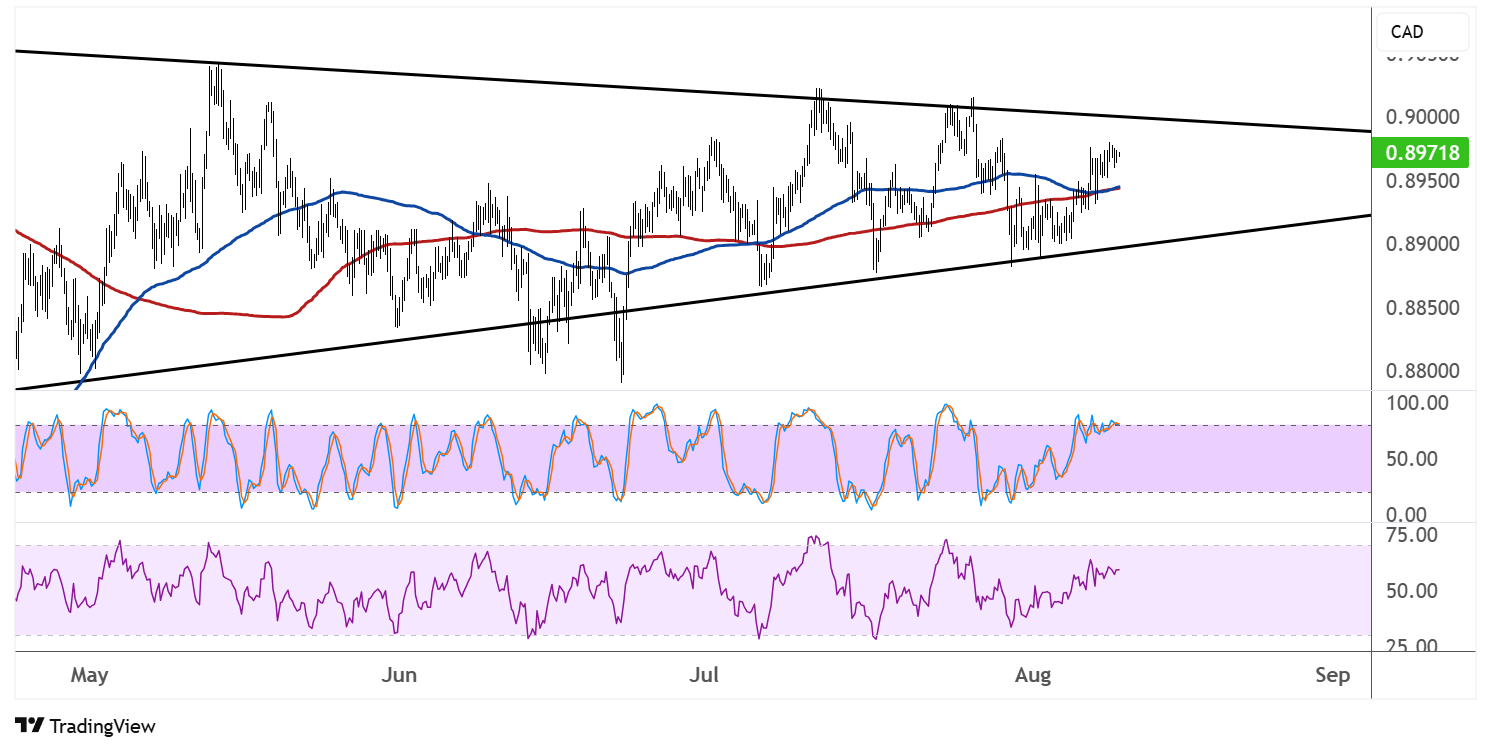
The moving average configuration supports the neutral consolidation theme, with the 100 SMA (blue line) and 200 SMA (red line) converging and intertwining. This sideways movement in the averages reflects the lack of directional momentum, though both indicators are positioned to act as dynamic support on any pullbacks.
Technical oscillators are providing mixed signals consistent with the consolidation phase. The stochastic indicator is hovering around the midpoint, suggesting neither buyers nor sellers have gained decisive control. However, the oscillator has room to climb toward the overbought region, indicating potential for upside momentum if triangle resistance breaks.
RSI is similarly positioned in neutral territory around the 50-60 range, confirming the balanced market conditions but showing slight bullish undertones that could support an upward breakout attempt.
Should the current resistance test fail, AUDCAD would likely retreat toward triangle support around 0.89000-0.89200, where the ascending trend line and moving averages could provide a floor for renewed buying interest.
AUDCAD could take cues from Australia’s jobs report midweek, as a strong print could further dampen hopes of an RBA cut anytime soon.