
AUDUSD has formed a double top chart pattern on its daily time frame, signaling that a reversal from the earlier uptrend could be in the works. The pair established twin peaks around the 0.6575 level, with the formation’s neckline support positioned near the 0.6520 area.
Price action is currently testing this critical neckline support, which represents a pivotal inflection point for the currency pair’s next directional move. A decisive break below this support level would confirm the double top reversal pattern and potentially trigger a sustained downtrend of similar magnitude to the formation’s height.

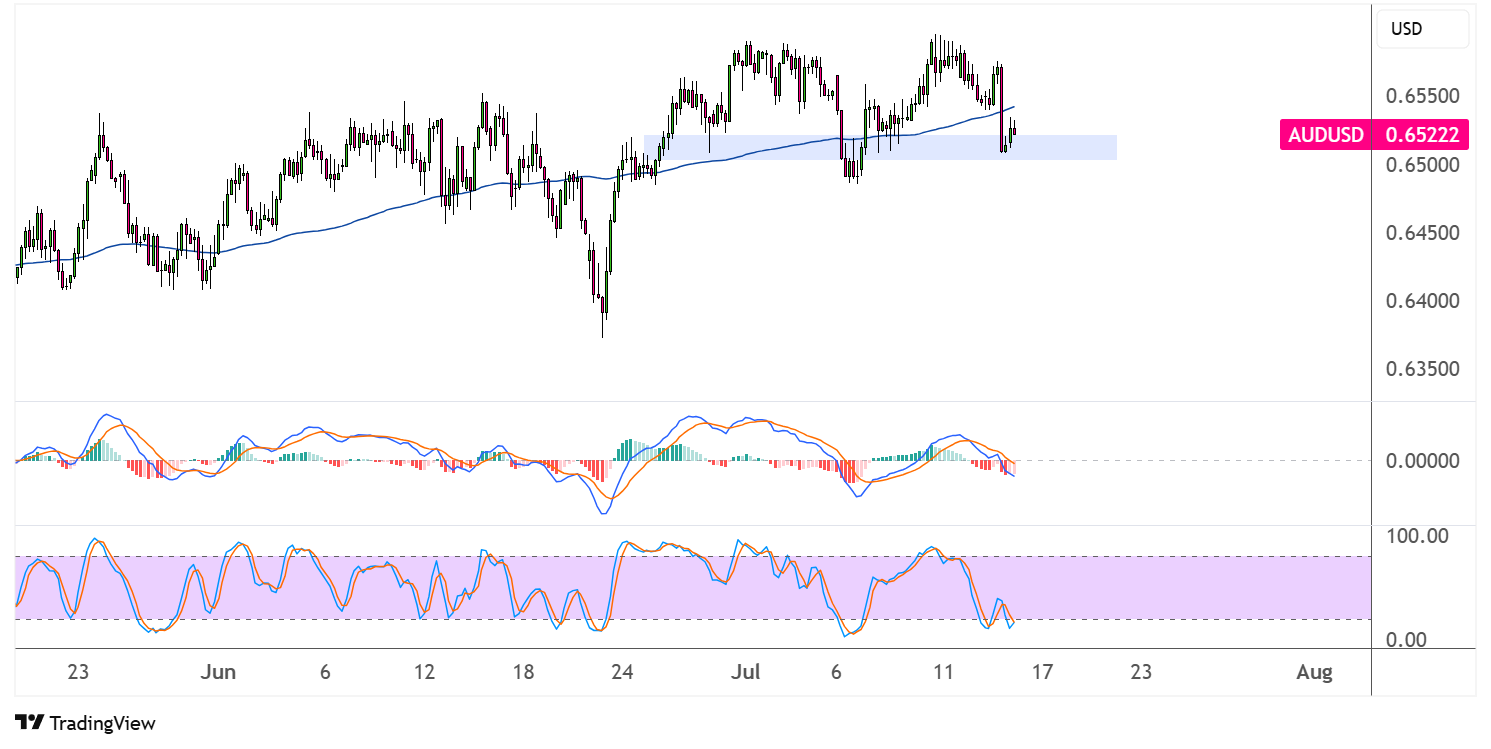
Moving average analysis shows the pair testing key dynamic support levels, with the indicators providing potential inflection points. The relationship between the shorter and longer-term averages continues to favor the bullish bias for now, though the recent stalling action has begun to narrow the gap between these technical levels.
The stochastic oscillator has turned lower from overbought territory, reflecting growing selling pressure and suggesting that bearish momentum may be building. The oscillator’s current trajectory indicates that sellers are beginning to assert control, particularly if the neckline support fails to hold.
RSI readings complement the stochastic analysis, with the momentum indicator showing signs of negative divergence as price made higher highs while the RSI formed lower peaks. This divergence pattern often precedes significant trend reversals.
A confirmed breakdown below the 0.6520 neckline support could target the 0.6450 level initially, with further downside potential toward 0.6400 or lower. Conversely, a strong bounce from current levels would need to reclaim the 0.6575 resistance to invalidate the bearish pattern.
AUDUSD could take cues from another set of US inflation data, this time the PPI release, as the earlier CPI report dampened hopes of Fed interest rate cuts for July and September. Still, note that the RBA surprised by keeping rates on hold in their July meeting, possibly keeping the Aussie supported should US producer price inflation fall short.