
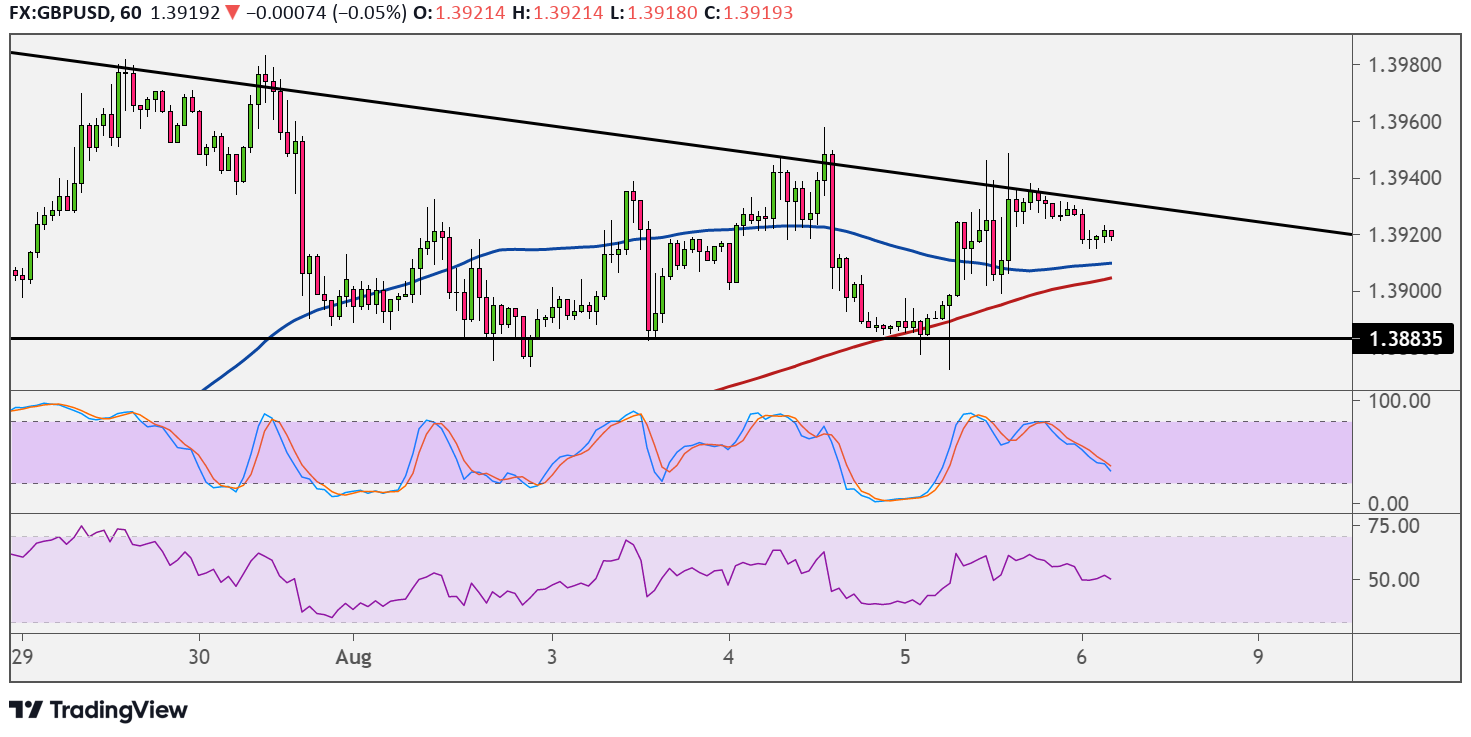
GBPUSD formed lower highs and found support around 1.3900, creating a descending triangle on its short-term chart. Price is currently testing the resistance, still deciding whether to make an upside break or head back to support.
The 100 SMA is above the 200 SMA to indicate that the path of least resistance is to the upside. If so, GBPUSD could break past the triangle top around 1.3930 and set off on a climb that’s the same size as the pattern or 70 pips.

However, the gap between the indicators is narrowing to reflect weakening bullish pressure and a potential bearish crossover. In that case, GBPUSD could retreat back to the triangle support again.
Stochastic is also on the move down to confirm that selling pressure is present, and the oscillator has some room to move south before indicating oversold conditions. RSI is treading sideways to reflect consolidation, barely offering strong directional clues at the moment.
The pound is drawing support from a relatively hawkish BOE statement, as the central bank hinted that they could tighten policy to keep inflation in check.
The next major catalyst is the NFP release later in the US session, as the outcome would impact Fed policy expectations. Analysts are expecting to see a slightly faster pace of hiring at 895K versus the earlier 850K increase in June.
The ADP jobs report is hinting at a downside surprise, as their headline figure missed the mark and the previous month’s reading was downgraded. The ISM PMIs, on the other hand, are showing growth in the employment sector for July.
An upside surprise might be enough to revive speculations about tapering before the end of the year, which might mean less stimulus for businesses and consumers. On the other hand, weak jobs data could ensure that interest rates could stay low for much longer.