
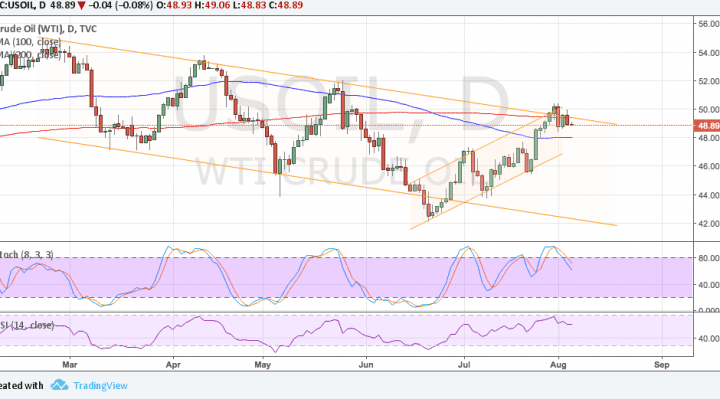
WTI crude oil is currently testing a major inflection point at the $50 per barrel level and next week’s OPEC meeting could determine whether a bounce or break is in order. This level is in line with the top of the descending channel on the long-term time frames and the ascending channel on the 1-hour chart.
The 100 SMA is below the 200 SMA so the path of least resistance is to the downside. In other words, the selloff is more likely to resume than to reverse. Price is also finding resistance at the 200 SMA dynamic inflection point at the top of the channel.

Stochastic is heading down from the overbought level to reflect a pickup in selling pressure. RSI also looks ready to head down so WTI crude oil could follow suit. In that case, a test of the channel support around $46 per barrel could be in the cards. A break below this support could reflect sustained bearish momentum, which might take the commodity to the longer-term bottom at $42 per barrel.
Traders are now turning their attention to the OPEC meeting next week in which Saudi Arabia is expected to push for stronger compliance among member nations. Although the output deal has been extended, compliance has been falling, which is rendering the agreement less effective. There also has been talk of lifting exemptions on Libya and Nigeria, although the latter informally pledged to limit its export levels.
Inventory reports haven’t spurred oversupply concerns just yet as the API figure reported a small surprise buildup but the EIA reading still indicated a draw. The next immediate catalyst could be the Baker Hughes oil rig counts and the US NFP report, which typically affects overall market sentiment and demand for commodities.
The lack of any resolve from the OPEC could still keep disappointment in play, which slowly lead to losses for crude oil. Actual action could be needed to sustain the climb but proposals could also keep price afloat.